

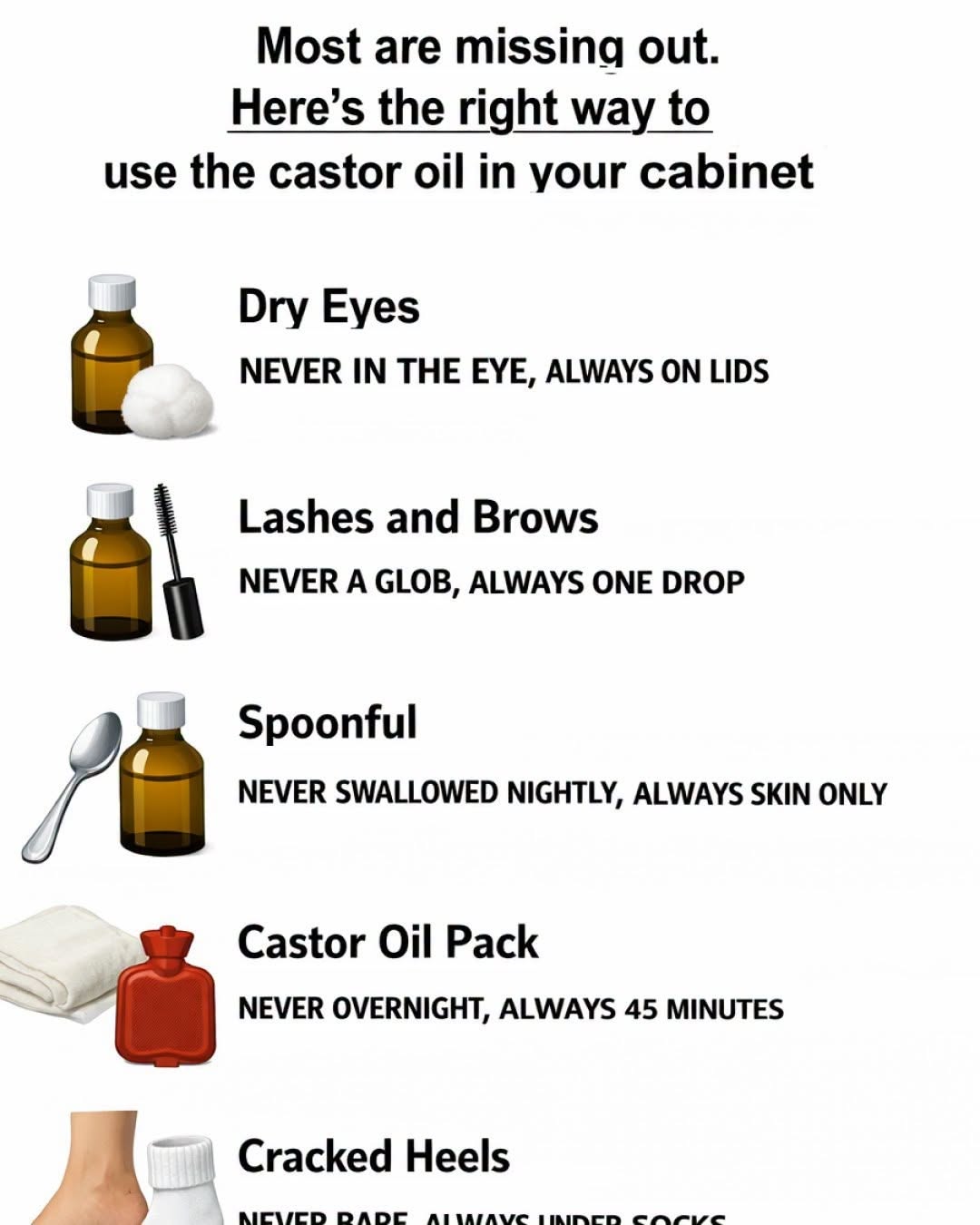
5. For cracked heels, rub it in well and then cover with cotton socks overnight
This is one of the most practical uses I’ve found. After washing and drying your feet thoroughly, rub about 1/4 to 1/2 teaspoon into each heel for a full 30 to 60 seconds. Really work it into the dry areas, then pull on clean cotton socks and leave them on overnight. Do this 3 to 5 nights a week. The socks matter because they hold the oil where you want it and keep you from greasing up the sheets.
The exception is if the heel is split open, bleeding, or has raw broken skin. In that case, do not apply castor oil there at all. Wait until the skin surface is closed again, because oil over damaged skin can sting and further irritate the area.
6. Choose cold-pressed, hexane-free castor oil
If you’re buying a bottle for skin use, the label matters. I look for cold-pressed and hexane-free because that tells me the oil was extracted with less harsh processing. For something I’m putting near my eyelids, brows, scalp, and cuticles several times a week, I want the simplest product I can find. A dark glass bottle is a good sign too, since it helps protect the oil from light.
The honest exception is a pharmacy eye drop or a clinician-recommended product that contains castor oil as one ingredient. Those are a different category altogether and do not need to meet the same simple-oil rule, because they are formulated products with a specific intended use.
7. Because it is very thick, warm the bottle in your hands first
Castor oil is sticky and heavy straight from a cool cabinet, and people often overpour because it doesn’t spread easily at first. Hold the closed bottle in your hands for 1 to 2 minutes, or stand it in a cup of warm, not hot, water for about 3 minutes. That makes one drop go much farther on cuticles, brows, lids, or scalp.
The exception is if the room is already warm and the oil pours easily. Even then, do not microwave it and do not heat it until hot. Warm helps it spread; heat increases the chance of irritation and mess.
8. Never use it on broken skin
This is one of the firm rules. Do not put castor oil on cuts, cracks that are open, scraped places, fresh burns, or any area that is weeping or actively irritated. Oil can trap heat and debris against damaged skin and make a sore spot angrier instead of calmer. Wait until the skin has closed and the surface is intact before using even a small amount.
The one honest exception is none for home use. If skin is broken, skip the castor oil. That is especially important on the feet, around nails, and anywhere you were planning to cover the area with socks, gloves, or a pack.
9. Patch test it on your forearm for 24 hours before regular use
Even simple oils can bother some people, and castor oil is no exception. Before using it on eyelids, scalp, feet, or around the nails, put 1 drop on a 1-inch spot of your inner forearm and leave it for 24 hours. If the area becomes itchy, red, bumpy, or burning, wash it off and don’t use it elsewhere.
The exception is if you have already used that exact bottle on your skin several times with no trouble. In that case, you’ve effectively done your test. But if it’s a new brand, a blended product, or you have sensitive skin, take the day and patch test anyway.
10. For packs, use wool or cotton flannel, not plastic wrap against the skin
A proper pack needs a layer that can hold the oil evenly. Cotton flannel or soft wool works well because it absorbs 1 to 2 tablespoons and spreads it across the area instead of letting it pool. Plastic wrap directly against the skin is a mistake. It traps too much heat and sweat, can make the skin prickle or itch, and turns a simple pack into an occlusive mess.
The exception is using a protective layer over the flannel, not under it. For example, you can place an old towel on top of the pack, or put a protective barrier between the pack and your clothing or heating pad. Just keep the natural fabric against the skin itself.
