

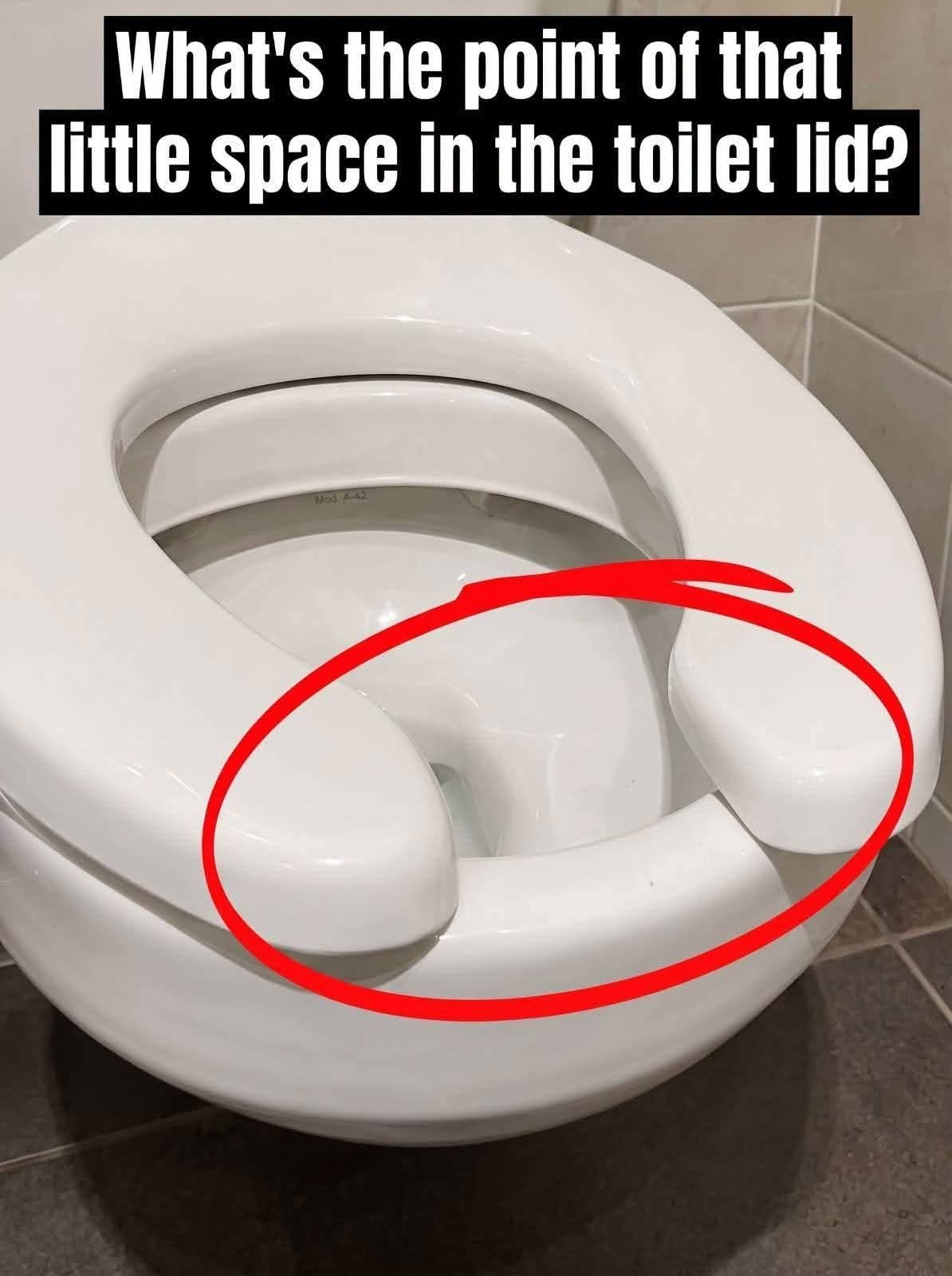
This is where it’s easy for internet explanations to get exaggerated.
You may hear claims that the open-front seat was specifically designed to prevent sexually transmitted infections, eliminate bacteria, or stop germs from spreading.
Those claims are generally much stronger than the evidence supports.
An open-front seat can have practical hygiene advantages, but it does not make a public toilet germ-proof.
And the biggest protection after using a public restroom is still wonderfully simple:
Wash your hands thoroughly with soap and water.
The seat shape is only one small part of restroom hygiene.
Does the Opening Keep You From Touching the Toilet?
Not necessarily.
Your body can still come into contact with the seat.
The open front simply changes the geometry of the surface.
It’s designed to leave a gap rather than providing a continuous ring.
So don’t think of the U-shape as creating a protective force field around you.
It doesn’t.
Instead, it’s a practical design that can offer easier cleaning and clearance while fitting the needs of public and institutional facilities.
Why Do Some Public Toilets Have Closed Seats?
If open-front seats are so common, why do some public bathrooms use fully closed seats?
Because there isn’t one universal rule for every restroom.
Design choices can depend on:
- Local regulations
- Facility type
- Toilet manufacturer
- Accessibility requirements
- Maintenance preferences
- Existing plumbing fixtures
- Renovation choices
- Owner preferences
You may walk into two public bathrooms in the same city and see completely different toilet-seat designs.
That’s perfectly possible.
The History Behind the Open-Front Seat
The open-front seat isn’t a brand-new invention.
The design became associated with public and institutional sanitation practices as restroom standards developed and facilities became increasingly focused on cleanability, hygiene, durability, and accessibility.
Over time, open-front seats became especially familiar in commercial and public settings.
And once a particular fixture design becomes standardized, it tends to stick around.
Think about other things you see in public bathrooms:
The automatic faucets.
The paper-towel dispensers.
The grab bars.
The wall-mounted soap dispensers.
The commercial hand dryers.
None of these details happened by accident.
Public restrooms are essentially an exercise in designing a space that can survive constant use by people you don’t know.
The toilet seat is just another example.
Why the Design Makes Sense in Busy Facilities
Imagine being responsible for cleaning a large public restroom.
You want fixtures that are:
- Durable
- Easy to inspect
- Easy to wipe down
- Easy to replace
- Familiar to users
- Compatible with common commercial installations
An open-front toilet seat checks several of those boxes.
That’s one reason this seemingly strange shape became so recognizable.
It’s not there to look unusual.
It’s there because somebody, somewhere, looked at a conventional design and thought:
“How can we make this work better in a busy public environment?”
