

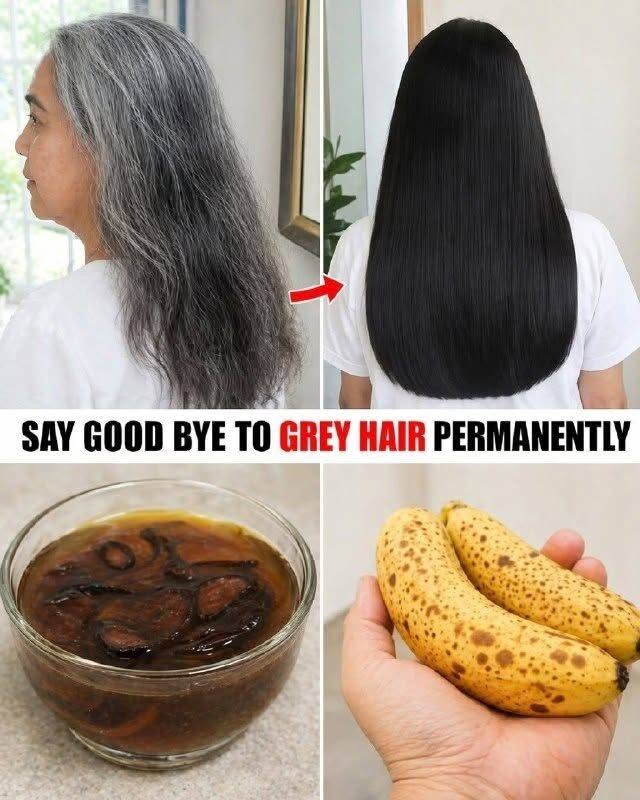
Can Gray Hair Turn Black Naturally in Just 5 Minutes? The Truth About Banana Hair Remedies and Natural Hair Care
Gray hair is a natural part of aging, but that doesn’t mean everyone is ready to embrace it. For many people, noticing the first silver strands can inspire a search for natural remedies that promise to restore their original hair color.
One popular beauty claim suggests that a simple homemade mixture containing bananas and other kitchen ingredients can transform gray hair into black hair in just five minutes while encouraging faster hair growth.
The idea sounds appealing. Bananas are affordable, widely available, and contain nutrients associated with general health. But can they actually reverse gray hair?
The answer is that no reliable scientific evidence shows that banana treatments can permanently turn gray hair black, especially within five minutes. However, bananas may be useful in certain homemade hair-conditioning treatments, and understanding why hair turns gray can help you make better decisions about caring for it.
Let’s explore what really happens when hair loses its color, how banana-based treatments work, and which habits can support healthier-looking hair.
Why Does Hair Turn Gray?
Before trying to reverse gray hair, it helps to understand what causes the change.
Hair gets its natural color from a pigment called melanin. Specialized cells known as melanocytes produce this pigment inside hair follicles.
As people age, these pigment-producing cells gradually become less active or disappear. When a follicle produces less melanin, the hair growing from it becomes lighter.
Eventually, it may appear gray, silver, or white.
Several factors influence when this happens.
1. Genetics
Genetics plays one of the largest roles in determining when hair starts turning gray.
Some people notice silver strands in their twenties, while others maintain much of their natural color into their sixties.
If your parents or grandparents experienced early graying, you may be more likely to experience it too.
2. Natural aging
As the body ages, many biological processes gradually change.
Hair follicles are no exception.
The cells responsible for hair pigmentation can lose their ability to produce melanin, resulting in progressively lighter hair.
This is a normal biological process rather than a sign that something is necessarily wrong.
3. Nutritional deficiencies
Certain nutrient deficiencies can sometimes contribute to premature graying.
For example, low vitamin B12 levels have been associated with changes in hair pigmentation in some people.
