

White vinegar
A diluted vinegar solution can be used to wipe suitable hard surfaces and temporarily disrupt ant scent trails.
However, vinegar does not eliminate the colony.
Avoid using it on natural stone, marble and other acid-sensitive surfaces.
Lemon
Lemon juice and citrus scents are frequently suggested as natural ant deterrents.
They may temporarily make certain surfaces less attractive, but they are not a reliable treatment for an infestation.
Peppermint
Peppermint oil is another popular household suggestion.
Some essential-oil-based products may discourage or kill insects on direct contact, but their effects are generally limited and do not reliably eliminate hidden ant colonies.
Essential oils can also be harmful to some pets, particularly cats, if used improperly.
Cinnamon
Cinnamon is often recommended because of its strong smell.
However, sprinkling cinnamon around a kitchen should not be considered a proven way to eliminate ants.
Coffee grounds
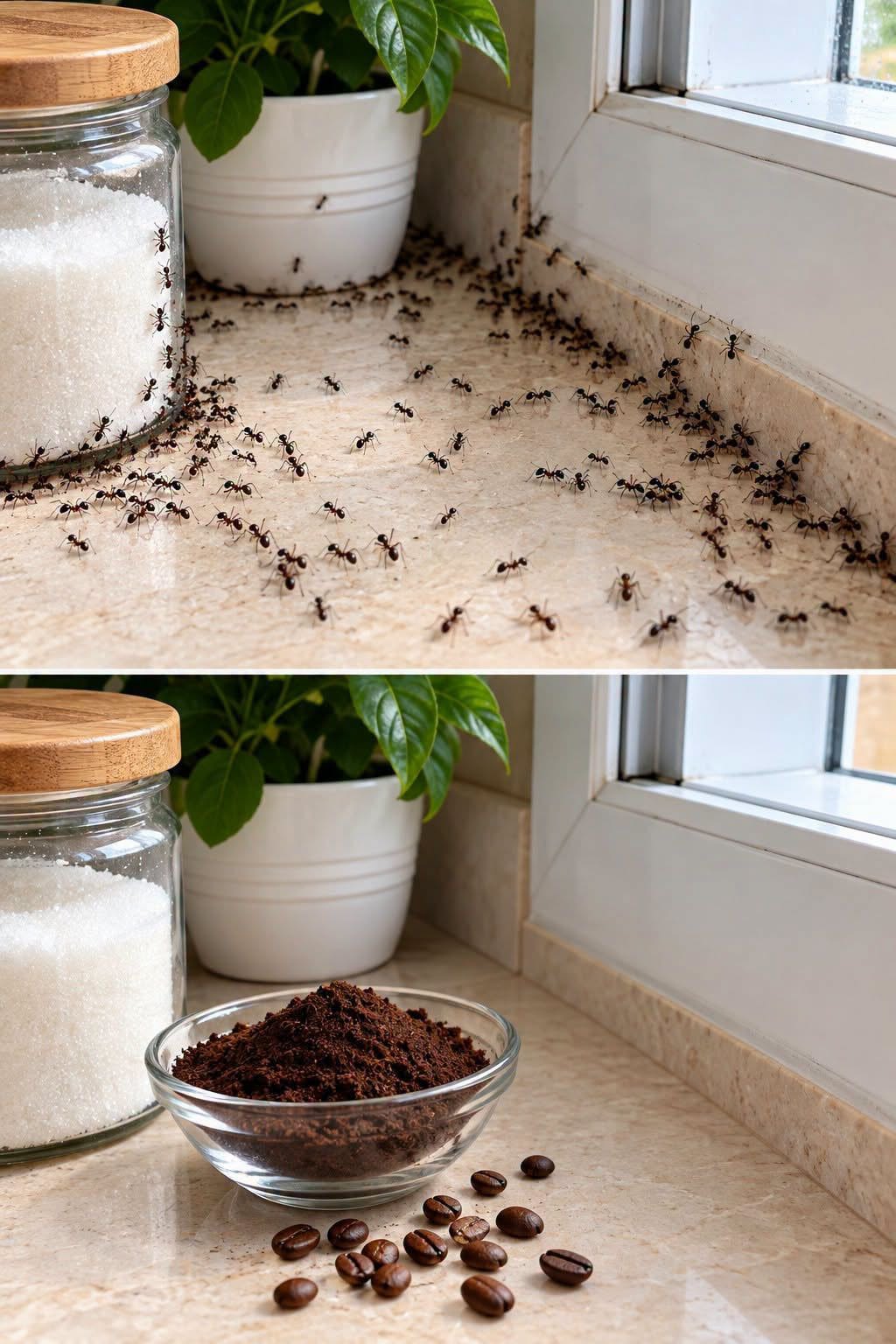
As discussed earlier, used coffee grounds are popular in gardening discussions, but their effectiveness against household ants has not been established.
The important lesson: Household ingredients may help with cleaning or provide temporary changes in scent, but they should not replace effective colony-control methods.
7. Why You Should Avoid Spraying Every Ant You See
It may feel satisfying to spray a line of ants and watch them disappear immediately.
Unfortunately, this often solves only the visible part of the problem.
Most of the colony may remain hidden, including the queen and developing ants.
If the food source and entry point are still available, new workers can continue arriving.
When using ant bait, spraying the surrounding area can also discourage ants from approaching the bait or contaminate it.
That is why a targeted approach is often more effective:
- Remove the food source.
- Clean areas that are not being baited.
- Identify the entry point.
- Place appropriate bait where ants are active.
- Allow time for the bait to work.
- Seal suitable entry gaps after the baiting process has been completed.
This approach focuses on reducing the colony rather than repeatedly killing individual workers. Entomology+1
8. Special Warning: Not All Ants Are the Same
One reason homemade ant remedies often fail is that different ant species behave differently.
Some ants prefer sweet foods, while others are more interested in proteins, oils or greasy food.
This also means that one type of bait may work well for one species but attract very few ants from another.
For example:
- Sugar-loving ants may be attracted to sweet liquid baits.
- Protein-seeking ants may prefer protein-based or oily baits.
- Carpenter ants may indicate a moisture problem or damaged wood.
- Pharaoh ants can be particularly difficult to control and may require specialist treatment.
If you notice large black ants repeatedly emerging from damp wooden structures, investigate the possibility of a carpenter-ant problem.
If the infestation is extensive, persistent or difficult to identify, professional pest control may be the safest and most effective option. University of Maryland Extension+2
