

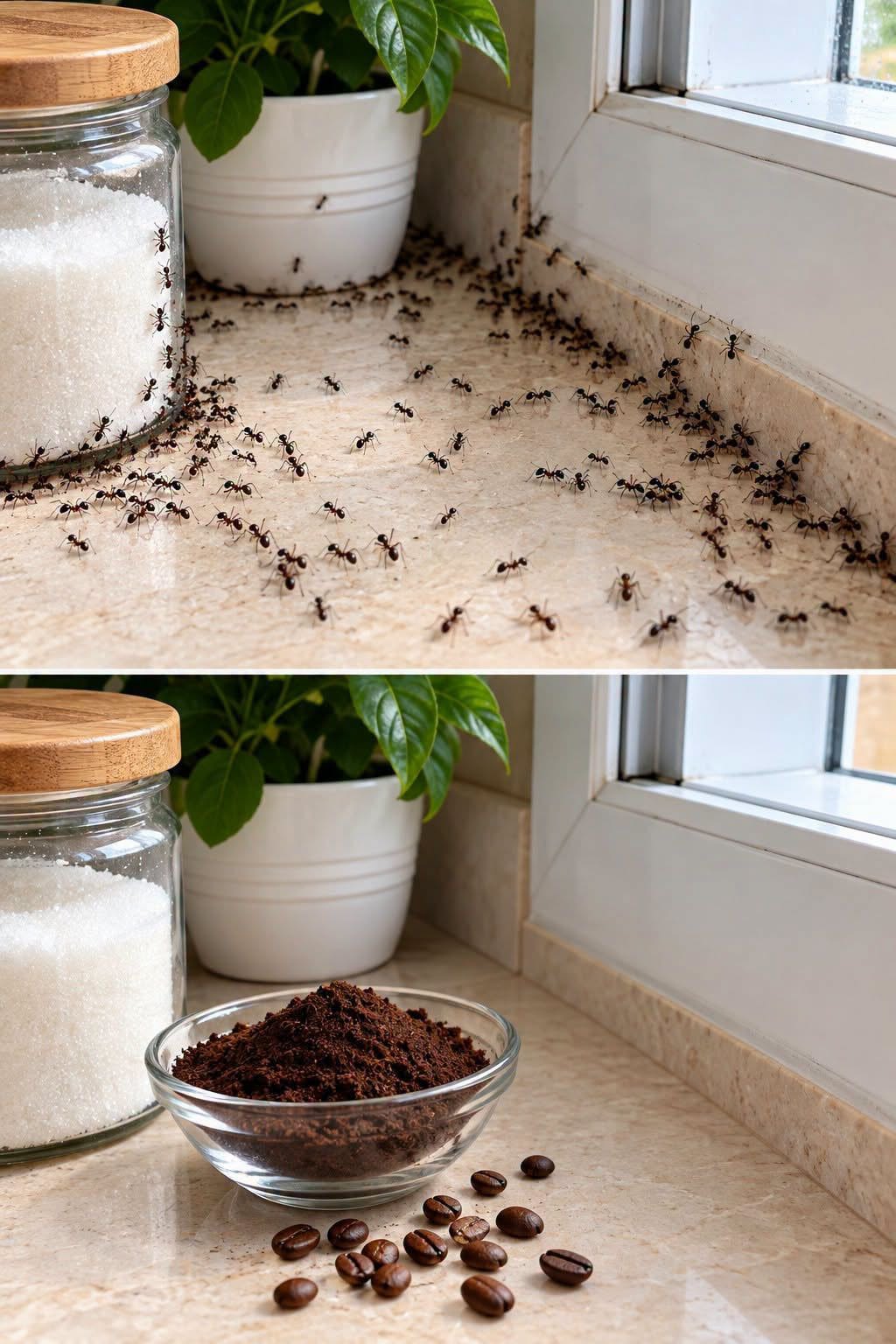
Why people use coffee grounds
Used coffee grounds have a noticeable smell and a rough, granular texture. Some people believe that spreading them near windows, doors or ant trails makes these areas less attractive to ants.
Coffee grounds are also commonly reused in gardens as a soil amendment, which makes them an appealing household material to experiment with.
However, there is an important limitation: there is no reliable scientific evidence that ordinary used coffee grounds can eliminate an ant colony or keep ants out of a home.
Washington State University Extension specifically notes that published evidence does not establish coffee grounds as an effective way to repel or kill garden pests. That does not directly test every household ant species, but it certainly does not support treating coffee grounds as a proven ant remedy. Washington State University
What about sugar?
Sugar is not a repellent. It is a food source that can attract ants, particularly species that prefer sweet foods.
Leaving an open jar of sugar on the counter can make an existing ant problem worse.
If you want to protect your kitchen, store sugar in a tightly sealed container instead.
So, should you use coffee grounds?
You can reuse coffee grounds in suitable garden composting applications, but I would not recommend relying on them to control an indoor infestation.
A more dependable method is to remove the food attracting the ants, clean their scent trails and use an appropriate ant bait when necessary.
3. The Method That Actually Targets the Ant Colony
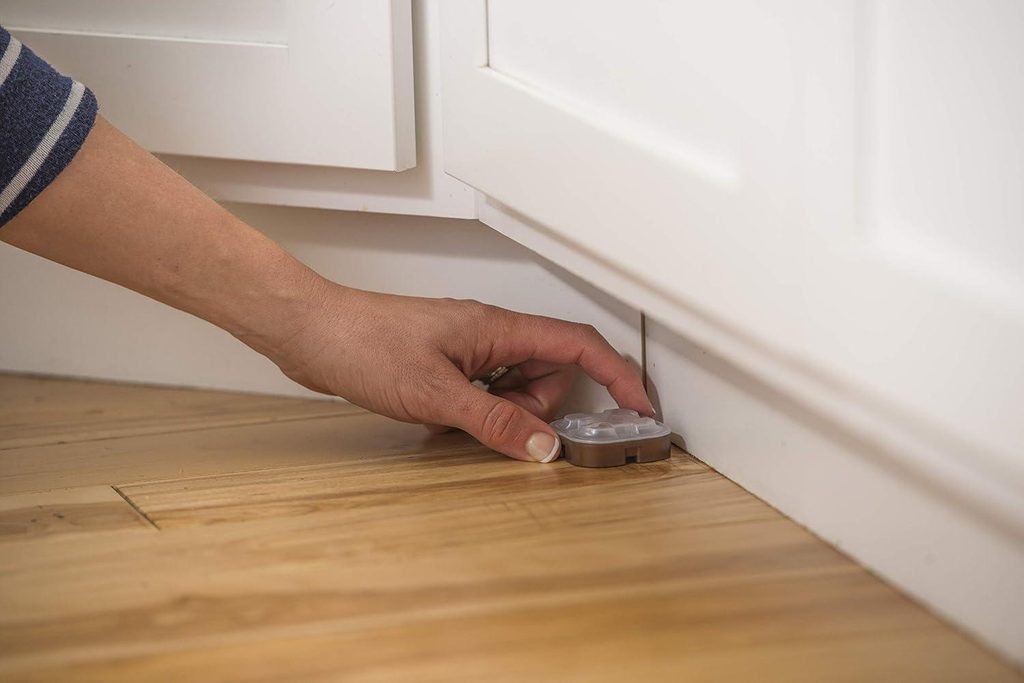
Here is the important difference between simply killing the ants you see and addressing the source of the problem.
When you spray individual ants, you may kill the workers walking across your kitchen counter. However, the colony can remain hidden behind a wall, beneath flooring, under a patio or outside near the foundation.
A suitable slow-acting ant bait works differently.
Worker ants discover the bait, feed on it and carry some of the material back to their colony. Depending on the product and ant species, the bait can then be shared with other colony members.
This can help control ants that you cannot reach with ordinary cleaning or surface sprays.
University extension specialists identify baiting as one of the most effective approaches for many indoor ant problems. Entomology+2
How to use ant bait correctly
- Follow the visible ant trail to identify where the ants are travelling.
- Choose a commercially labelled ant bait suitable for the species and location.
- Place the bait near the ant activity, following the product instructions.
- Allow worker ants to reach and carry the bait away.
- Do not spray insecticide or cleaning products around the bait.
- Replace the bait according to its instructions if it becomes empty, contaminated or dries out.
- Continue monitoring the area until activity decreases.
An important detail: You may initially see more ants gathering around the bait. This does not necessarily mean the treatment is failing. They may be feeding and transporting the bait back to the colony.
Depending on the species, product and colony size, control may take several days or longer.
Keep all bait stations away from children, pets, food and food-preparation surfaces. Use only products authorised for the intended location and follow their labels carefully.
4. Step-by-Step: How to Clean Away Ant Trails Naturally
Before trying any repellent, it is important to remove the invisible chemical trails that guide ants toward food.
You can do this with an ordinary cleaning solution.
What you need
- Warm water.
- A small amount of mild dishwashing liquid.
- A clean microfiber cloth.
- A dry towel.
Instructions
Step 1: Locate the ant trail
Watch where the ants are travelling. They may follow the edge of a countertop, move along a windowsill or disappear behind a kitchen cabinet.
Step 2: Remove accessible food
Put away sugar, fruit, bread, biscuits and other exposed foods.
Clean up any spills or crumbs that may be attracting the insects.
Step 3: Prepare a mild cleaning solution
Mix warm water with a small amount of dishwashing liquid.
Step 4: Wipe the entire trail
Use the damp cloth to clean the surface where the ants have been walking.
Pay particular attention to corners, edges, windowsills and the areas around food containers.
Step 5: Clean the surrounding area
Do not stop at the visible line of ants. Clean the nearby surfaces where food residue or sticky deposits may have accumulated.
Step 6: Dry the area
Use a clean towel to remove excess moisture.
This method helps remove the scent trails and food residue that attract additional ants. It provides temporary relief, however, and does not eliminate a hidden colony by itself. UMN Extension+2
