

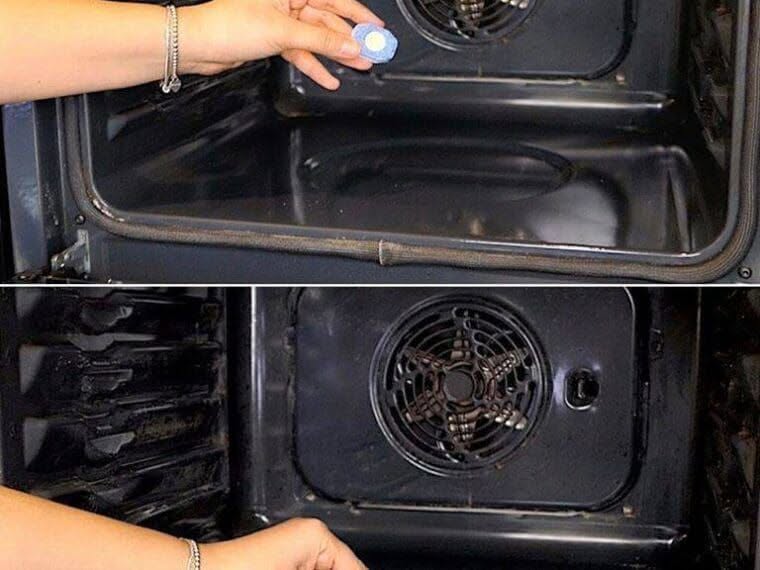
Allow the dampened residue to sit for several minutes so the warm detergent solution can soften the buildup.
For particularly stubborn areas, you can place a damp cloth over the spot temporarily to keep it moist.
Don’t leave a large amount of detergent solution sitting inside the oven for an extended period.
Step 5: Start Scrubbing
Once the grime has softened, use a sponge or non-abrasive scrubber to work on the dirty areas.
You may be surprised by how much easier the residue is to remove after it has been softened.
Work in sections rather than trying to clean the entire oven at once.
For very stubborn carbonized spots, several gentle passes are better than aggressively scraping the surface.
Step 6: Rinse Thoroughly
This step is extremely important.
Dishwasher detergent is not something you want lingering inside your oven.
Use a clean, damp cloth to wipe the surfaces repeatedly with fresh water until you have removed the cleaning residue.
You may need several passes.
Step 7: Dry Everything
Use clean towels to dry the interior as much as possible.
Leave the oven door open for a while so the remaining moisture can evaporate.
Before using the oven again, make sure there is no visible detergent residue or pooled water.
Don’t Forget the Oven Racks
The racks can be some of the dirtiest parts of the oven.
Place them in a bathtub, large basin, or another suitable container and cover them with hot water. If your rack manufacturer’s instructions permit it, a dishwasher tablet can be dissolved in the water to help loosen grease and baked-on food.
Let the racks soak, then scrub them with a suitable non-abrasive brush or sponge.
Rinse them very thoroughly and dry them before putting them back in the oven.
Check your oven and rack manufacturer’s cleaning instructions first, since some finishes can be damaged by certain detergents or abrasive cleaning methods.
