

The Science: Why it happens
Copper reacts quickly to the chemicals in dishwasher detergent. The detergent is designed to remove organic matter, but it also strips the natural patina and protective lacquer (if present) off copper.
The Consequence
- Tarnishing: The copper will turn a dull, dark brown or even green (verdigris) very quickly.
- Loss of Shine: The beautiful, reddish-gold shine will vanish.
- Toxicity Risk: If the copper is unlined (like some traditional cookware), the dishwasher can strip the tin lining or cause the copper to react with acidic foods later, which can be toxic in large amounts.
How to Clean It Instead
- Hand Wash: Use warm soapy water.
- Polish: To restore shine, use a mixture of lemon juice and salt, or a dedicated copper polish like Bar Keepers Friend.
- Dry Immediately: Copper water spots easily.
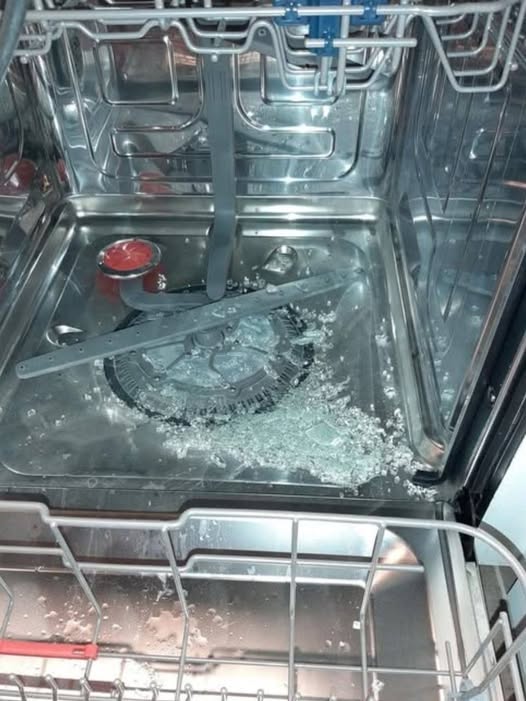
Bonus: What to do if glass breaks in your dishwasher?
If you end up with a situation like the photo at the top of this article, do not just run the next cycle.
- Safety First: Wear thick rubber gloves.
- Remove Large Shards: Carefully pick out all visible large pieces of glass.
- Check the Filter: Remove the bottom filter assembly (usually a twist-lock cylinder in the floor of the dishwasher). Glass shards love to hide here. Rinse the filter under running water.
- Check the Spray Arms: Look at the holes in the spinning spray arms. If a shard of glass is lodged in there, it will block water flow and ruin the wash. Use a toothpick to clear holes.
- Run a Rinse Cycle: Run an empty rinse cycle to flush out any remaining microscopic dust.
- Inspect the Pump: If the dishwasher sounds loud or isn’t draining, a piece of glass may be stuck in the impeller pump. This may require a professional repair.
