

We all love the dishwasher. It is the unsung hero of the modern kitchen, saving us hours of scrubbing, soaking, and drying every single week. It feels like a magical box that makes dirty things clean. But that magic comes with a price: the dishwasher is a harsh environment. It combines high heat, powerful jets of water, and alkaline detergents that can be devastating to certain materials.
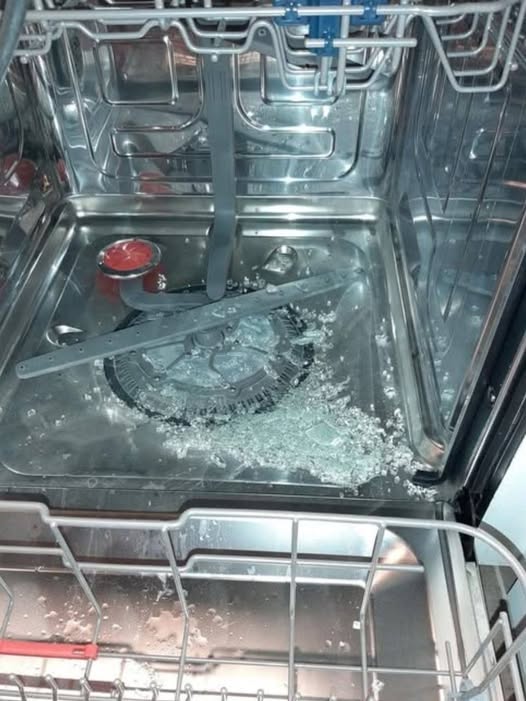
If you look at the image above, you see a kitchen nightmare. A glass has shattered inside the dishwasher, leaving a trail of dangerous shards across the bottom rack and the filter. This is a stark reminder that not everything belongs in that soapy vortex.
Putting the wrong items in your dishwasher doesn’t just ruin the item; it can ruin your machine, contaminate your other dishes, or even cause injury (like stepping on glass shards later).
Below is the ultimate, comprehensive guide to the 8 things you absolutely should not put in a dishwasher, the science behind why they get damaged, and how you should clean them instead.
1. Cast Iron Skillets and Dutch Ovens
If you ask any chef or home cook what the cardinal sin of dishwashing is, they will point immediately to cast iron. Whether it is a vintage Lodge skillet or a high-end Le Creuset Dutch oven (if the enamel is chipped or it’s raw iron), the dishwasher is the enemy.
The Science: Why it happens
Cast iron cookware relies on a layer of polymerized oil called “seasoning.” This seasoning creates a natural, non-stick surface and protects the iron from rusting. Dishwasher detergents are highly alkaline and designed to strip grease and food residue. When you put cast iron in the dishwasher, the detergent strips away the seasoning layer entirely.
Furthermore, cast iron is porous. The intense heat and prolonged exposure to water cause the iron to absorb moisture.
