

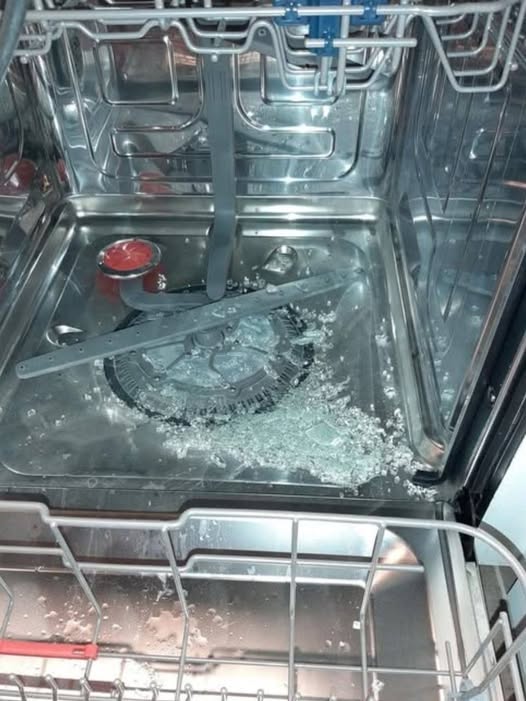
3. Crystal and Delicate Glassware (The “Shatter Zone”)
Referencing the image above: This is the most dangerous category. As seen in the photo, glass can shatter. But even if it doesn’t break, delicate glassware is at risk.
The Science: Why it happens
There are two main risks here: Thermal Shock and Etching.
- Thermal Shock: If a cold glass is placed in a dishwasher that immediately starts with a hot wash, the rapid temperature change can cause the glass to shatter. Furthermore, the powerful jets can knock lightweight crystal glasses into each other or the metal racks, causing them to break (as seen in the photo).
- Etching: Crystal often contains lead or other minerals that make it sparkle. The high heat and harsh detergents (specifically the high pH) can cause a chemical reaction with the glass surface. This is called “etching.”
The Consequence
- Breakage: You end up with a dishwasher full of glass shards (like the photo), which can clog the pump and filter, requiring a costly repair.
- Cloudiness: Etching is permanent. Your beautiful crystal wine glasses will look permanently foggy, cloudy, or iridescent. No amount of scrubbing will fix this; the glass surface has actually been corroded.
How to Clean It Instead
- Hand Wash Only: Use lukewarm water and a mild dish soap.
- Rinse Immediately: Don’t let wine or juice dry in the glass.
- Dry with Microfiber: Use a lint-free cloth to prevent water spots and avoid air drying which can leave mineral deposits.
4. Non-Stick Pans (Teflon/PTFE)
Non-stick pans are a kitchen staple for easy cooking and easy cleanup. Ironically, putting them in the dishwasher makes them harder to clean over time.
The Science: Why it happens
Non-stick coatings (like Teflon) are durable but sensitive to high heat and abrasive chemicals. Dishwasher detergents contain enzymes and bleaching agents that are too harsh for the coating. Additionally, the high heat of the drying cycle can degrade the chemical bonds of the non-stick surface.
There is also the physical aspect: the water jets can bang the pan against other dishes, chipping the coating.
The Consequence
- Flaking: The coating may start to peel or flake off into your food. While generally considered non-toxic if ingested in small amounts, it ruins the pan.
- Loss of Non-Stick Properties: Food will start to stick to the pan, defeating the purpose of buying it.
- Warping: Thin aluminum non-stick pans can warp under the high heat, making them wobble on the stove.
