

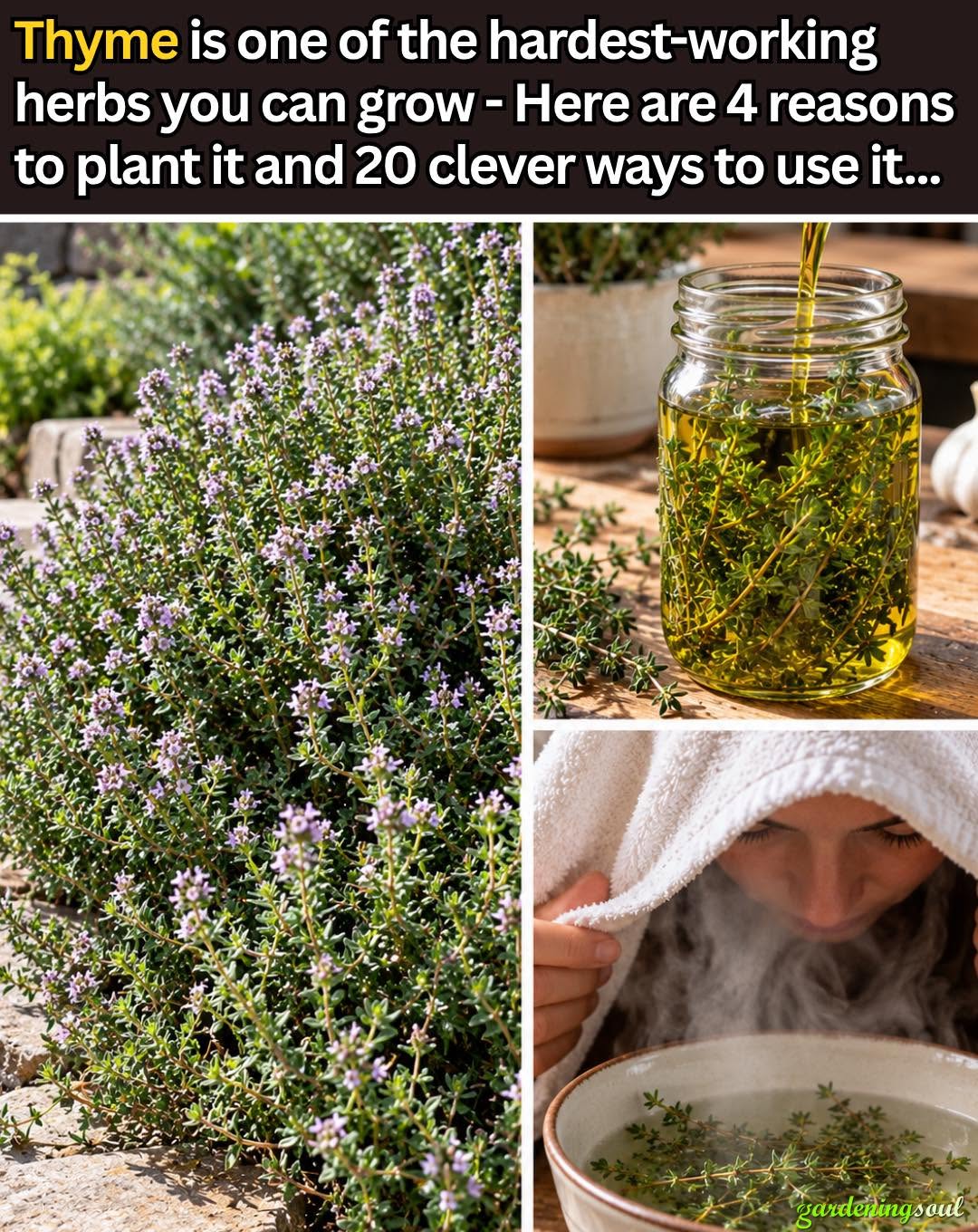
For centuries, thyme (Thymus vulgaris) has been revered as a symbol of courage, a staple of traditional medicine, and an indispensable culinary asset.
While many modern gardeners view it simply as a reliable kitchen herb to toss into a Sunday roast, this low-growing, aromatic subshrub is actually a powerhouse of utility.
Thyme is incredibly resilient, thriving in poor soils and baking sun where more delicate herbs quickly wither.
Whether you are looking to maximize your backyard ecosystem, create a sustainable low-water landscape, or build a natural home apothecary, thyme deserves a permanent place in your garden.
4 Compelling Reasons to Grow Thyme
1. The Ultimate Low-Maintenance, Drought-Hardy Groundcover
Hailing from the rocky, sun-baked hillsides of the Mediterranean, thyme is hardwired to survive on minimal moisture.
Once its fibrous root system is established, it becomes exceptionally drought-tolerant. Varieties like creeping thyme (Thymus serpyllum) form dense, low-growing mats that hug the earth, making them an eco-friendly alternative to water-guzzling grass lawns.
It handles foot traffic gracefully, releasing a soothing, herbaceous aroma every time it is stepped on.
2. A Magnet for Beneficial Pollinators
When thyme erupts into bloom during the mid-summer months, its tiny white, pink, or lavender flowers cover the plant like a blanket.
These blossoms are rich in high-quality nectar, making thyme one of the absolute best plants for attracting honeybees, bumblebees, and predatory wasps.
By placing thyme near your vegetable beds, you will significantly boost the pollination rates – and yields – of your tomatoes, peppers, and squash.
3. Natural Pest Deterrent for Your Garden
While bees love the flowers, destructive garden pests are repelled by the intense concentration of volatile essential oils found within thyme’s tiny leaves.
Thyme contains high levels of thymol, a natural compound that confuses and repels masking pests like cabbage loopers, whiteflies, hornworms, and even aphids.
Planting it as a companion next to vulnerable brassicas or roses creates an aromatic shield that protects your garden naturally.
4. Year-Round Harvesting Potential
Unlike delicate annual herbs like basil or cilantro that turn to mush at the first sign of a frost, thyme is a tough, woody perennial. In many temperate growing zones, it remains evergreen throughout the winter months.
Even when buried under a light layer of snow, you can brush it aside and harvest fresh, flavorful sprigs for a warming winter stew, ensuring your kitchen never runs dry of fresh herbs.
20 Brilliant Ways to Use Thyme
Now that your garden is overflowing with this fragrant herb, it’s time to put it to work. From the kitchen to the medicine cabinet and the cleaning closet, here are twenty ways to unlock thyme’s full potential.
