

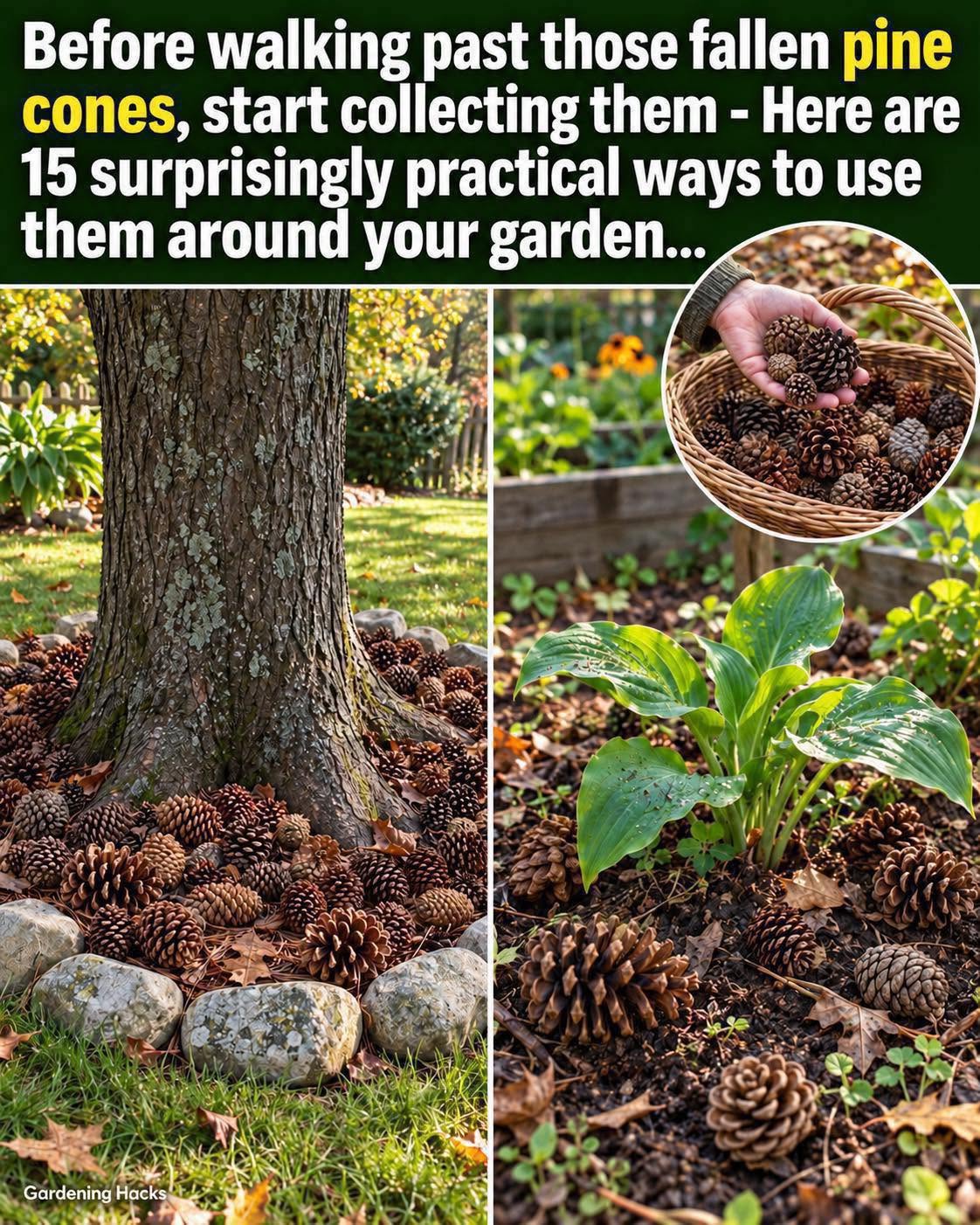
- Water regulation: Their porous structure helps retain moisture while allowing airflow.
- Weed suppression: They can block sunlight, preventing weed growth.
- Soil aeration: Over time, decomposing cones add organic matter and improve soil structure.
- Wildlife habitat: They provide shelter for beneficial insects, small mammals, and pollinators.
- Sustainable mulch: They’re biodegradable and long-lasting.
15 Brilliant Ways to Use Pine Cones in Your Garden
1. Mulch That Lasts for Years
Mulching is one of the most effective ways to protect your soil and plants – and pine cones make an excellent long-lasting mulch. Their woody structure slows decomposition, providing multi-season protection.
Benefits:
- Retains moisture and reduces evaporation
- Regulates soil temperature
- Suppresses weeds naturally
- Adds organic matter slowly over time
How to use:
- Layer whole or crushed pine cones around the base of perennials, shrubs, and trees.
- Avoid direct contact with plant stems to prevent rot.
- Combine with shredded leaves or bark for improved texture.
2. Natural Weed Barrier
If weeds are a recurring headache, pine cones can help. Their tough, spiky texture makes it difficult for weeds to push through, especially when used in raised beds or around ornamental plants.
Why it works: The dense layer blocks sunlight and physically prevents germinating weeds from establishing.
How to use:
- Spread a thick layer (2–3 inches) around garden beds or pathways.
- For added protection, combine with cardboard or newspaper underneath.
3. Perfect for Moisture Regulation
Because pine cones are porous yet slow to break down, they absorb water and release it gradually, helping keep roots hydrated without waterlogging the soil.
Best use: Around plants that like even moisture, such as hydrangeas, hostas, and shade perennials.
Tip: Mix pine cone mulch with compost or leaf mold to create a moisture-balancing layer that also boosts fertility.
4. Soil Aeration and Structure Improvement
Over time, pine cones naturally decompose, enriching the soil with carbon and organic matter. Their structure loosens compacted soil, improves drainage, and enhances root growth.
How to use:
- Break larger cones into smaller pieces and mix them into heavy clay soils.
- Incorporate them into raised bed layers as part of a “lasagna garden” base.
5. Excellent Drainage Layer for Containers
Tired of heavy, waterlogged pots? Pine cones are a simple, eco-friendly solution. A layer at the bottom of planters improves drainage and reduces the risk of root rot – and they’re much lighter than stones or gravel.
How to use:
- Add 2–3 inches of whole pine cones at the bottom of large pots.
- Top with soil and plant as usual.
