

Sweden and Britain specifically noted hostile foreign actors as reasons for revamping their emergency guidance, and we should also note that being isolated by two major oceans, like we are here in the U.S., doesn’t provide as much of a buffer as it once did. Terror attacks and cyber threats can happen anywhere.
Should we be worried?
It depends on your perspective. Natural disasters and weather-related crises are definitely on the rise, so being prepared to hunker down at home for a few days after an emergency (or flee before one, if authorities advise that route) is just good planning. And keeping your cybersecurity defenses up is always smart given today’s threat environment.
But if you are hearing lots of panic about a new 90-day guidance from the government, remember that this applies to military bases, not the public. If anyone on your social media feed is encouraging you to prep an underground bunker with food and supplies for a coming three-month emergency, be circumspect, especially if they are selling something.
Should ordinary people be prepping for a 90-day emergency?
No. The U.S. government’s official advice remains the same: Three days’ worth of supplies is sufficient. Other countries also give recommendations of days, not months. Plus, groceries are expensive right now! Unless you have the space and money to bulk-buy food and water, do what makes you most comfortable.
Shoppers stock up on staples including toilet paper, bottled water, diapers and canned goods at the Costco
Boston Globe/Getty Images
What kinds of supplies should you always have on hand?
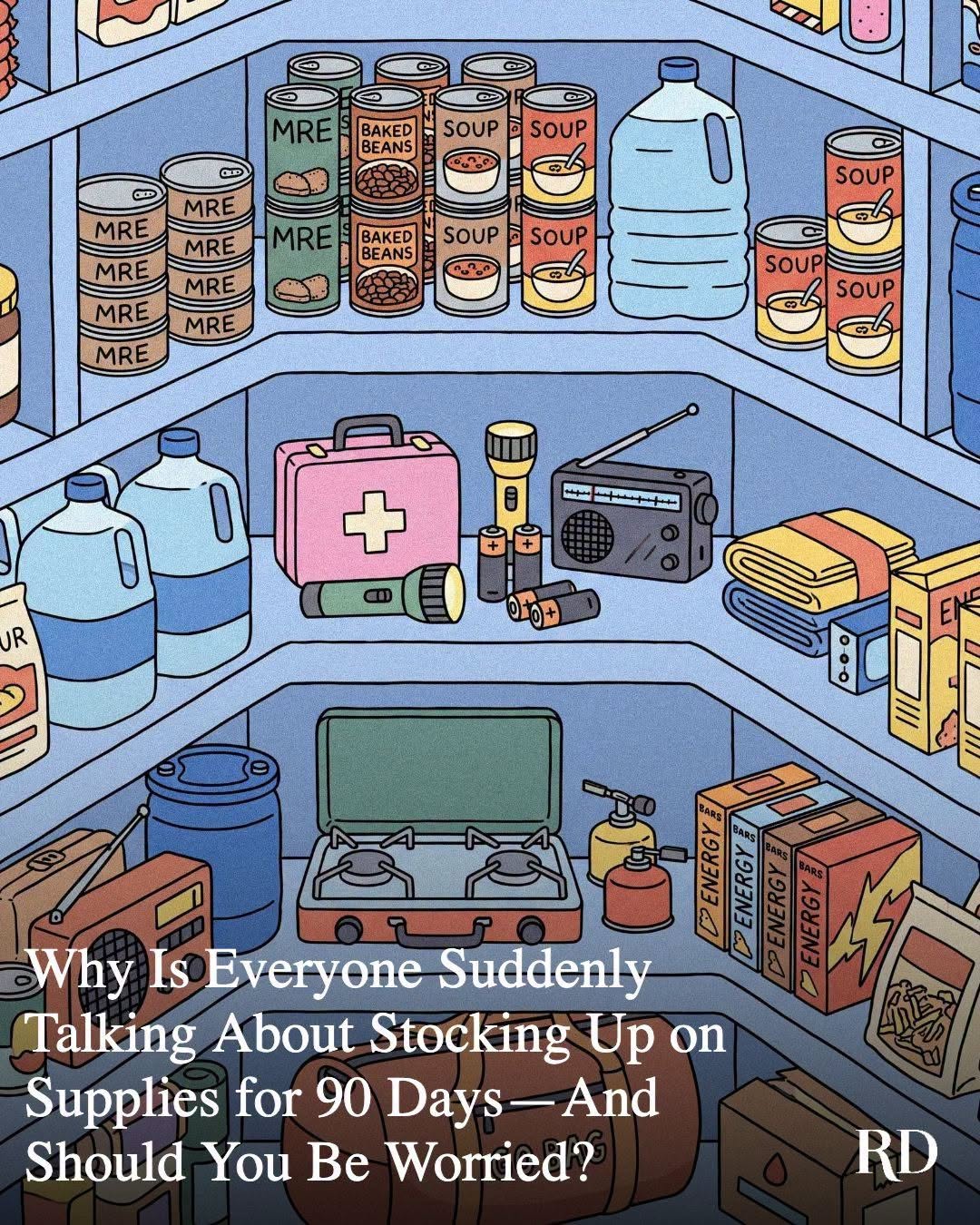
Whether you prep for three days or 90, these are the things you should keep in your emergency preparedness kit:
Water: 1 gallon per person, per day
Nonperishable food: three days’ worth of food that never expires
First aid kit
Flashlight and extra batteries
Dust masks or respirators
Phone chargers and backup batteries
Weather radio
Manual can opener and basic tools
Personal sanitation: trash bags, twist ties and moist towelettes
Medication
