

increase in antioxidants.
Antioxidants help protect cells from oxidative stress and inflammation, which are linked to aging and various chronic health conditions.
Brown bananas contain higher concentrations of beneficial antioxidant compounds than less-ripe bananas, making them a valuable addition to a balanced diet.
Are There Any Downsides?
While bananas are generally well tolerated, some individuals may experience sensitivities.
Potential issues include:
- Mild allergic reactions
- Oral itching or swelling
- Digestive discomfort
- Cross-reactions in people with latex-fruit syndrome
If you notice unusual symptoms after eating bananas, consult a healthcare professional.
Quick Comparison: Which Banana Is Best?
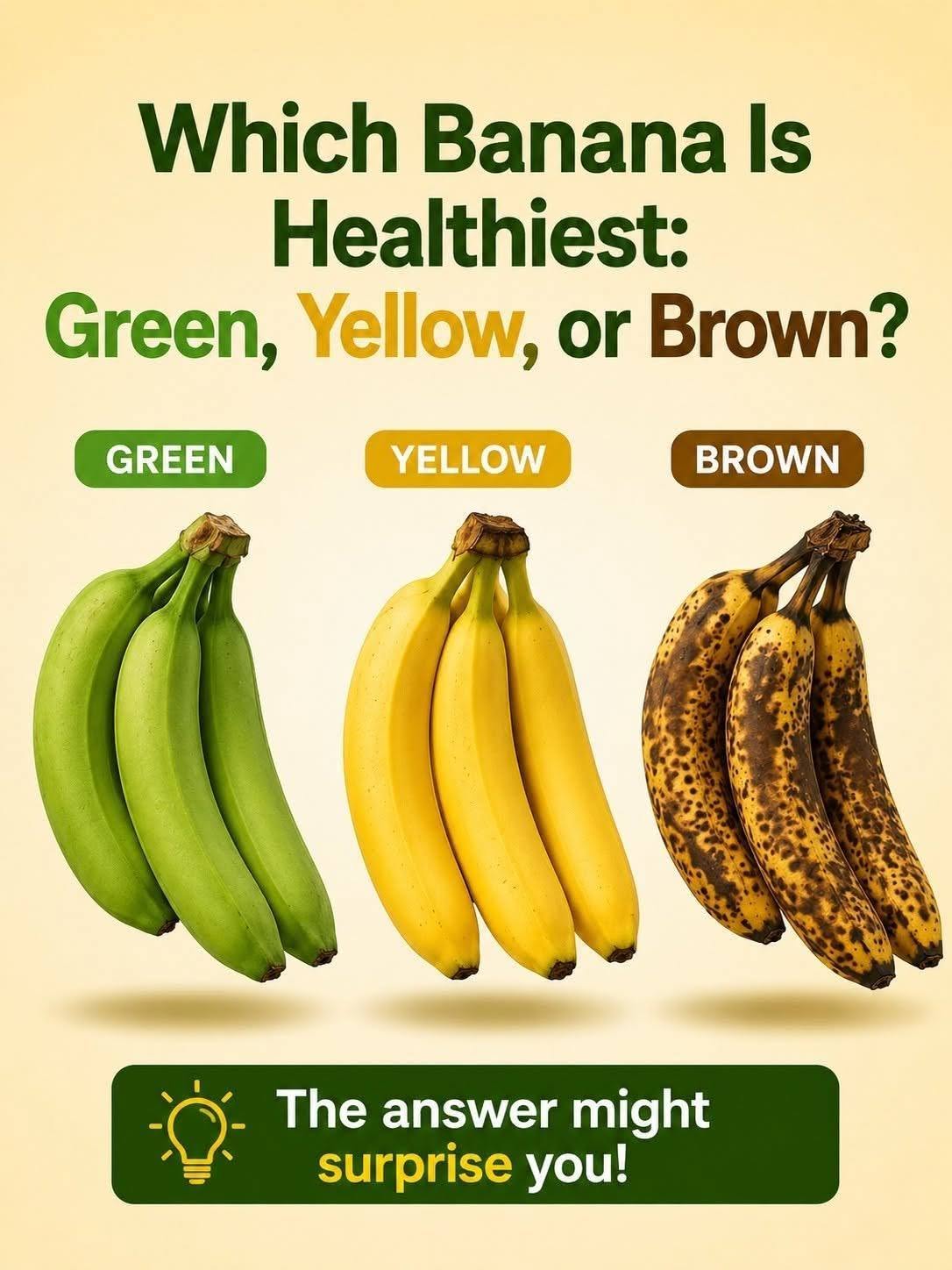
Ripeness Main Benefit Best For Green High resistant starch, lower sugar Blood sugar control, gut health, fullness Yellow Balanced fiber and sugar Everyday nutrition and energy Brown Highest antioxidants, easiest digestion Immune support, digestion, antioxidant intake
The Bottom Line
There isn’t a single “healthiest” banana.
Green bananas shine when it comes to blood sugar management
