

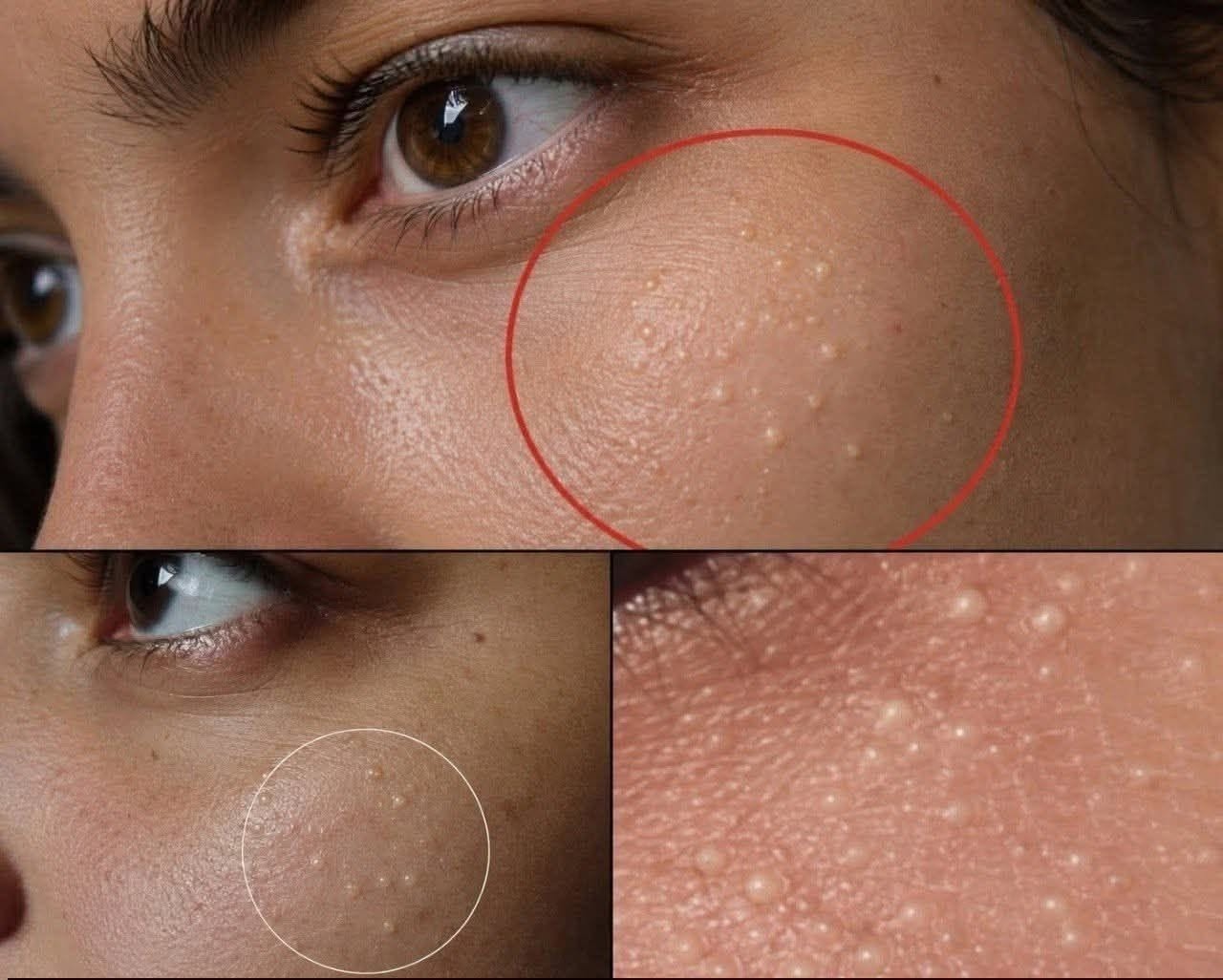
Lemon Juice and Baking Soda
Avoid applying lemon juice or baking soda to milia.
Lemon juice can irritate the skin and increase sensitivity to sunlight, while baking soda can disrupt the skin’s natural protective barrier.
These ingredients are not proven milia treatments.
Toothpaste and Harsh Scrubs
Toothpaste is designed for teeth, not facial skin. Harsh scrubs can cause irritation without removing the trapped keratin responsible for milia.
Gentle skincare is a safer choice.
Can Retinol Help With Milia?
Topical retinoids, including retinol and prescription retinoids, can help with certain skin conditions and may be recommended in selected cases of milia.
However, they are not necessary for everyone, and they can cause dryness, redness, peeling, and irritation.
Because milia frequently occur around the eyes, applying retinoids too close to the eyelids can be particularly problematic.
Consult a dermatologist before using a retinoid specifically to treat milia, especially if the bumps are close to your eyes.
Topical retinoids should generally be avoided during pregnancy or when trying to become pregnant unless your healthcare professional provides specific guidance.
When Should You See a Dermatologist?
Although milia are generally harmless, it is worth seeking professional advice when:
- The bumps persist and you want them removed.
- They spread or change in appearance.
- The surrounding skin becomes red, painful, or swollen.
- You are unsure whether the bumps are milia or another skin condition.
- They develop near the eyes and interfere with your comfort.
- You have tried several skincare products without improvement.
A dermatologist can examine the bumps and determine whether they are milia, acne, syringomas, or another condition that requires different treatment.
If treatment is appropriate, a professional may remove the milia using a sterile instrument or another suitable procedure. The technique depends on the location, number of bumps, and individual skin characteristics.
Do not attempt to reproduce professional extraction techniques at home.
