

However, the absence of a bad smell does not guarantee safety.
Salmonella contamination usually cannot be detected by smell, taste, or appearance.
Safe handling and adequate cooking remain important even when eggs appear fresh.
11. What About the Popular Egg Float Test?
You’ve probably seen this kitchen trick online.
Place an egg in a bowl of water.
If it sinks, people say it’s fresh.
If it floats, they say it’s spoiled.
The test is based on a real physical change.
As eggs age, their internal air cell generally becomes larger.
An older egg may therefore become more buoyant.
However, the float test does not reliably determine whether an egg is safe to eat.
An egg that sinks can still contain harmful bacteria.
And an egg that floats is not necessarily contaminated, although it is older and may have reduced quality.
For safety, use appropriate storage practices, observe recommended storage periods, and discard eggs that are damaged or show signs of spoilage.
12. How to Cook Eggs More Safely
Cooking is an essential part of reducing the risk of foodborne illness.
For conventional egg dishes, FDA guidance recommends cooking eggs until both the yolk and white are firm.
Scrambled eggs should not remain runny.
Egg dishes such as casseroles should reach an internal temperature of 160°F (71°C).
If you enjoy dishes containing raw or undercooked eggs, consider using pasteurized eggs or egg products.
Examples include homemade mayonnaise, certain dessert fillings, and sauces that are not heated sufficiently.
Pasteurization reduces the risk of harmful bacteria while allowing eggs to be used in preparations that might otherwise involve raw ingredients.
People at higher risk of severe foodborne illness should be especially careful with raw and undercooked eggs.
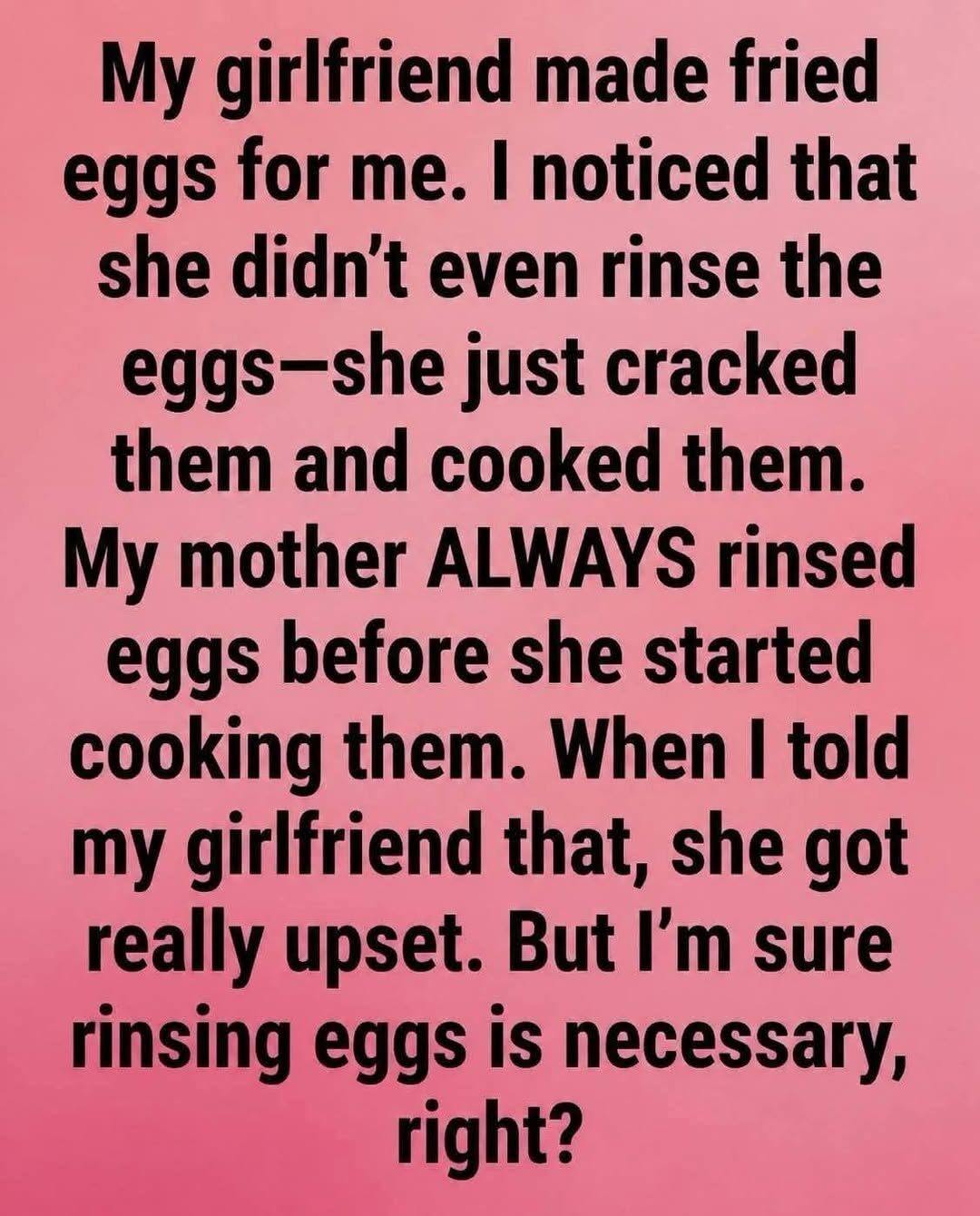
13. Why Your Mother or Grandmother May Have Always Washed Eggs
Many kitchen traditions are passed down through generations.
Some develop because of local food production practices.
Others begin as precautions that seem sensible at the time.
If your mother grew up using eggs collected directly from backyard chickens, she may have encountered shells covered in dirt or nesting material.
Washing eggs may have seemed like an obvious way to keep the kitchen clean.
That habit could then continue even after the family began purchasing commercially washed supermarket eggs.
This doesn’t mean previous generations were careless or uninformed.
Food safety practices evolve as scientific understanding, agricultural methods, and distribution systems change.
A habit that made sense in one setting may be unnecessary in another.
The important thing is to understand why a practice exists rather than assuming it must always be followed.
