

In other words, nutrition was not removed from dental science.
Instead, knowledge of tooth decay became more comprehensive.
Mellanby’s contribution remains historically important, even though not all of her original dietary theories are supported by current evidence.
The Bottom Line: A 1932 Discovery With a Valuable Lesson for Today
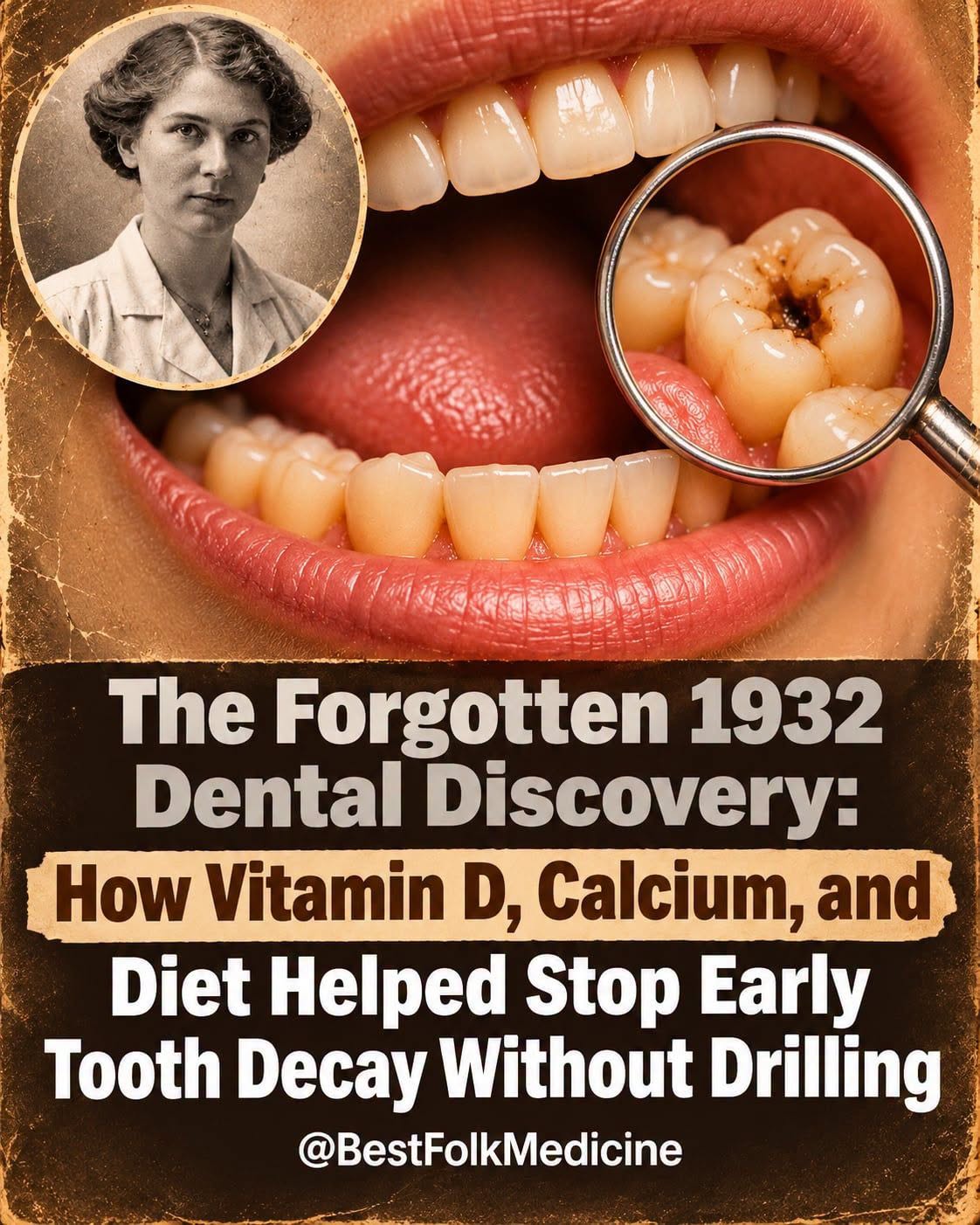
Nearly a century ago, May Mellanby helped demonstrate that nutrition could influence the development and progression of dental decay.
Her work challenged the idea that tooth health depended only on mechanical cleaning and dental procedures.
Today, scientists understand that teeth exist in a constantly changing environment where minerals are lost and restored throughout the day.
Vitamin D supports normal calcium metabolism, calcium and phosphorus contribute to healthy mineralized tissues, and saliva helps replenish minerals lost from enamel.
Fluoride provides additional protection, while reducing frequent sugar exposure helps prevent the repeated acid attacks that drive tooth decay.
The most important discovery is not that every cavity can be healed naturally.
It is that early tooth decay is not always irreversible.
When mineral loss is identified before the enamel surface breaks down, preventive care can sometimes stop the process and help restore mineral balance.
That is a powerful reason to take nutrition, oral hygiene, and preventive dental visits seriously.
And perhaps it is the most valuable lesson from Mellanby’s research:
Protecting teeth begins long before the dentist reaches for a drill.
