

Martha sat.
“My father owned a small grain business in Missouri. He was a good man, but he trusted people too easily. One winter, a merchant cheated him out of nearly everything he had.”
She ran a finger along the edge of the ledger.
“My father never recovered. I decided I would never allow someone to take advantage of me simply because I lacked the knowledge to understand a document.”
“What happened to your father?”
“He died when I was twenty-six.”
Griffin lowered his eyes.
“I’m sorry.”
“So am I.”
She turned another page.
“Afterward, I worked for a wholesale merchant in St. Joseph. I handled invoices, shipping records, payroll, and accounts. I also helped several small farms organize their purchases and sales.”
“Then why answer a marriage advertisement?”
Martha was quiet for a moment.
“Because I wanted a home.”
Griffin looked at her.
“Not a job?”
“Not another employer. I had spent years helping other people protect their businesses while never having anything of my own.”
She closed the ledger.
“I also wanted a husband who would see me as a person.”
Griffin looked away.
“I didn’t promise that.”
“No. You did not.”
The words hurt more than he expected.
The following morning, Martha began reorganizing the ranch.
She did not announce a grand plan.
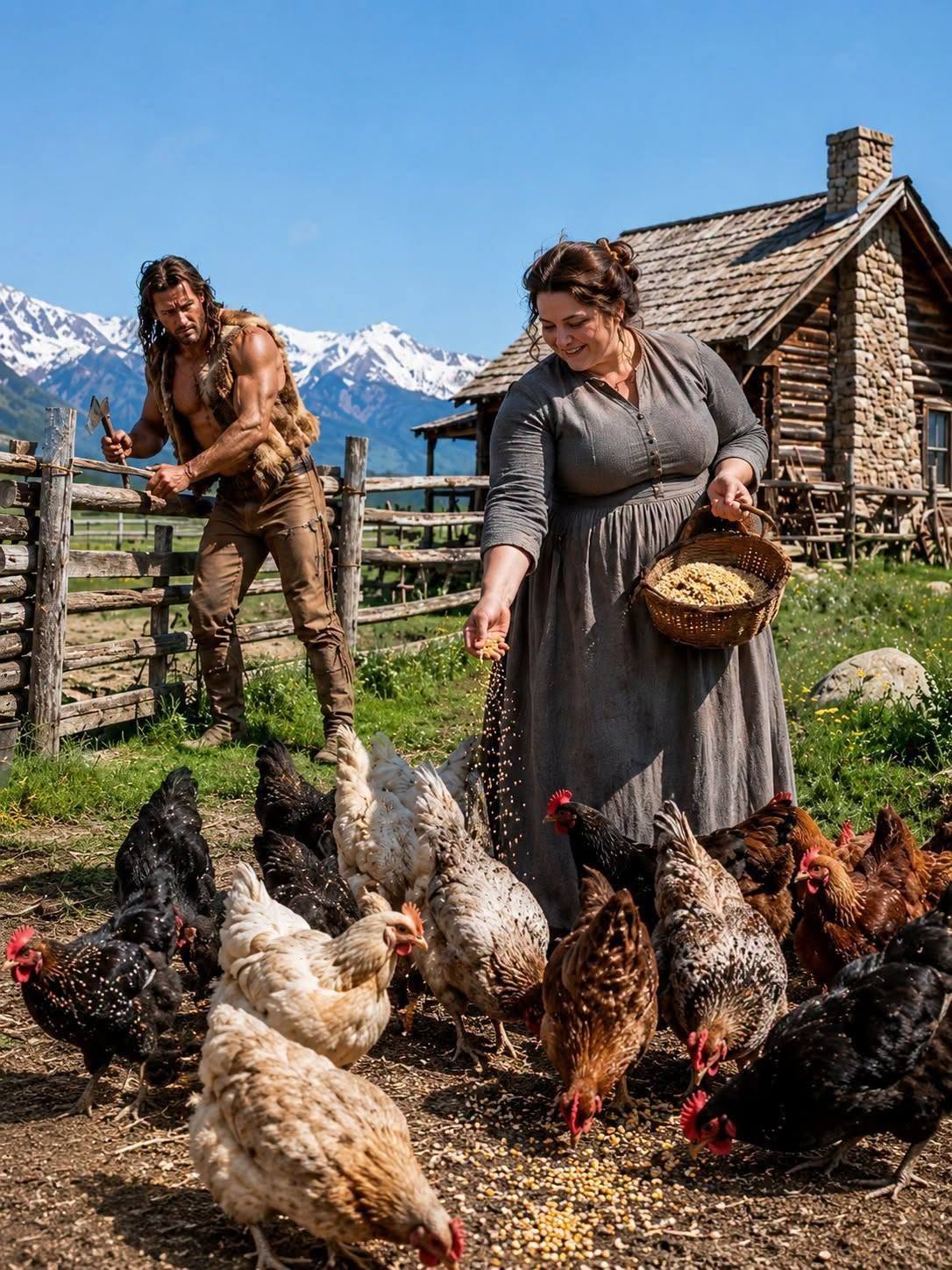
She simply started with the chicken enclosure.
The spoiled feed was discarded. The troughs were scrubbed. She separated the sick hens and examined their condition.
She asked Griffin to buy clean feed and a mineral supplement in town.
He objected to the expense.
She showed him how much grain had been wasted through poor storage.
The new feed would cost less than continuing to lose eggs and birds.
Griffin reluctantly agreed.
Next, she inspected the well.
She found that the wooden casing had collapsed in one section, allowing loose soil to enter the water.
Griffin had been lowering a bucket into the mud for weeks.
Martha insisted they stop using it for drinking.
They boiled water from the small spring near the eastern pasture and hired a local well digger to inspect the damaged shaft.
Then she turned her attention to the cattle.
She counted them.
She examined their condition.
She compared the number against the old herd records.
“Where are the seventeen missing animals?” she asked.
Griffin rubbed his forehead.
“Sold.”
“To Caldwell?”
“Yes.”
“At what price?”
He named the amount.
Martha wrote it down.
“That was far below the market rate.”
“He said they were underweight.”
“Some were. Not all.”
“How would you know?”
“Because your father recorded their breeding and age. The older animals were sold at a loss, but the younger ones were healthy enough to command a better price.”
Griffin stared at her.
“You have been reading my father’s books?”
“Yes.”
“Those records are nearly ten years old.”
“Which is why I have been comparing them with the recent sales.”
She turned the ledger toward him.
“Your father knew how to keep a herd.”
Griffin felt a familiar ache.
“My father knew everything.”
“He knew a great deal. But he made one mistake.”
“Which was?”
“He trusted Caldwell.”
Griffin sat down.
For the first time, he wondered whether his father’s death had left him with more than a failing ranch.
Perhaps it had left him with a carefully arranged trap.
Martha did not waste time accusing anyone.
She began writing letters.
One went to the county recorder requesting copies of the original mortgage filings.
Another went to a cattle buyer in Cheyenne asking for independent weight records.
A third went to the bank requesting a complete payment history.
Griffin watched her write.
“Who taught you to write letters like that?”
“Experience.”
“You’re not afraid of making enemies?”
Martha looked up.
“I have spent too much of my life being frightened of people who mistake money for authority.”
Over the next few days, the Broken Spur began to change.
Griffin repaired the worst sections of fencing.
Martha organized the supplies and made a list of repairs by urgency.
They worked together to clean the feed shed and move the remaining grain into dry barrels.
She found an old seed catalog in one of Griffin’s father’s trunks and began studying the crops suitable for the region.
The ranch was not going to be saved by chickens alone.
The soil needed attention.
The water needed managing.
And the cattle herd needed to stop depending on Caldwell’s buying operation.
One evening, Griffin found Martha sitting beside the kitchen window, examining a small envelope.
“What is that?”
“A letter.”
“From whom?”
“A woman named Clara Bell.”
He waited.
Martha folded it.
“I wrote to her after seeing an advertisement in the county paper. She operates a small dairy farm near Cheyenne. She knows about raising poultry and preserving food.”
Griffin frowned.
“Why are you involving strangers?”
“Because we need knowledge we do not possess.”
“We?”
Martha looked at him.
“Unless you intend to save this ranch alone.”
He had no answer.
The following morning, she announced that Clara would visit.
Griffin objected.
Then he discovered that Clara Bell had spent twelve years managing a profitable dairy operation and had agreed to bring practical advice about poultry, milk preservation, and feed.
When Clara arrived, she was a short, sharp-eyed woman in her fifties who carried a basket of eggs and a bundle of notes.
She examined the chickens.
She examined the well.
Then she looked at Martha.
“You weren’t exaggerating.”
“I rarely do.”
Clara laughed.
Griffin stood nearby, bewildered by the conversation.
Within an hour, the two women had developed a plan to improve the chicken enclosure, establish a small dairy operation, and sell eggs and butter in town.
Griffin began to understand something uncomfortable.
His wife was not waiting for him to tell her what to do.
She was building something.
That afternoon, Clara left with a promise to return in two weeks.
Martha spent the evening calculating the cost of the improvements.
Griffin watched her write.
“You’ve done more in ten days than I managed all summer.”
She stopped.
“That is not entirely true.”
“What do you mean?”
“You worked all summer keeping the ranch alive. You just worked without a plan.”
He looked at her.
“Do you think we can save it?”
Martha studied the figures.
“Yes.”
“You’re certain?”
“No.”
Griffin almost laughed.
“That’s reassuring.”
She met his eyes.
“I am certain we have been losing money in ways that can be stopped. I am certain the land still has value. And I am certain that Caldwell has been relying on your desperation to keep you from examining his accounts.”
She closed the ledger.
“What happens after that depends on what we do next.”
Outside, a cold wind swept across the empty pasture.
Griffin looked toward the western fence line.
For the first time in years, the Broken Spur seemed less like a graveyard.
But Caldwell had not disappeared.
And he had just learned that the woman inside Griffin Tucker’s cabin was a far more dangerous opponent than the rancher himself.
