

For issues involving disability access, travelers may also ask to speak with a Complaint Resolution Official in the United States. The U.S. Department of Transportation requires U.S. and foreign airlines serving the country to make trained officials available to address certain disability-related concerns at airports and by telephone during covered operations.
How Passengers Can Report Inappropriate Treatment
People who believe they experienced poor treatment during a flight can take practical steps after the journey. Keeping a record of the flight number, travel date, seat assignment, names of staff members when available, and a factual description of what occurred can help an airline investigate a complaint.
A useful complaint is specific and measured. Rather than relying on assumptions about another person’s intentions, passengers can describe observable facts: what was said or done, when it happened, whether crew were informed, and how the issue was handled. If there were witnesses, their seat numbers may be relevant, although travelers should respect others’ privacy and avoid posting personal details online.
Customers can usually submit complaints through an airline’s website or customer-relations department. In the United States, travelers may also file an aviation consumer complaint with the Department of Transportation. Consumer protection agencies do not decide every personal disagreement, but they can monitor patterns and assess whether airlines are meeting applicable obligations.
The Importance of Verifying Emotional Viral Stories
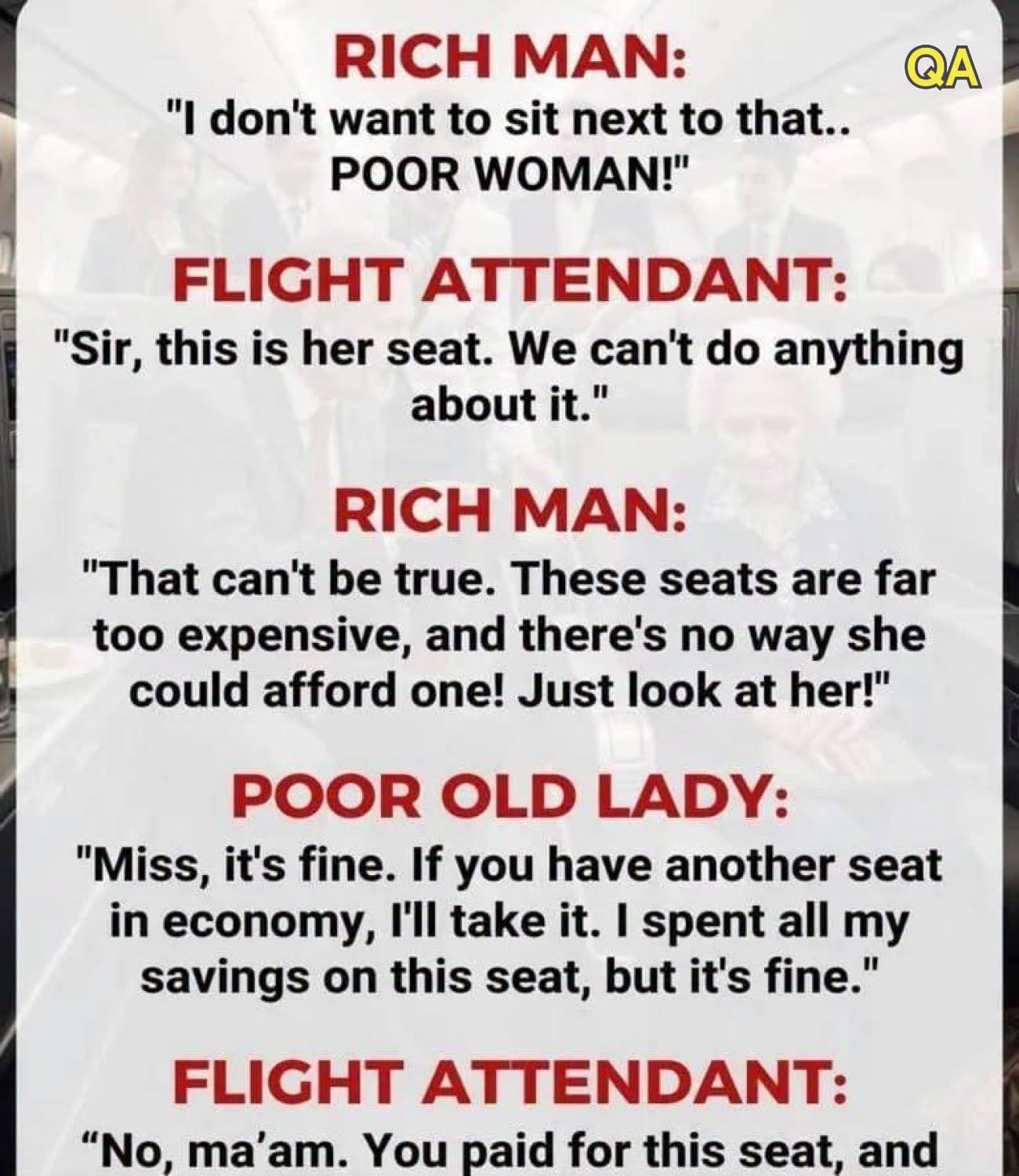
Stories about public humiliation followed by a dramatic revelation are common online. They are often written to create suspense and emotional engagement, sometimes ending with an incomplete prompt such as “continue reading.” While compelling storytelling can be harmless entertainment when clearly labeled as fiction, readers should be cautious when a post is framed as a real event without supporting evidence.
Reliable reporting typically identifies the basic facts of an incident and provides attribution. Depending on the situation, this may include an airline statement, court documents, police reports, interviews, public records, or coverage from established news organizations. A headline alone, anonymous narration, and an external link are not enough to confirm that an event occurred as described.
Before sharing a dramatic travel story, readers can check whether reputable outlets have reported it, search for official airline information, review the publication’s corrections policy, and look for the date and location of the alleged event. These steps help prevent misinformation from spreading while still allowing people to discuss the broader issues a story may raise.
