

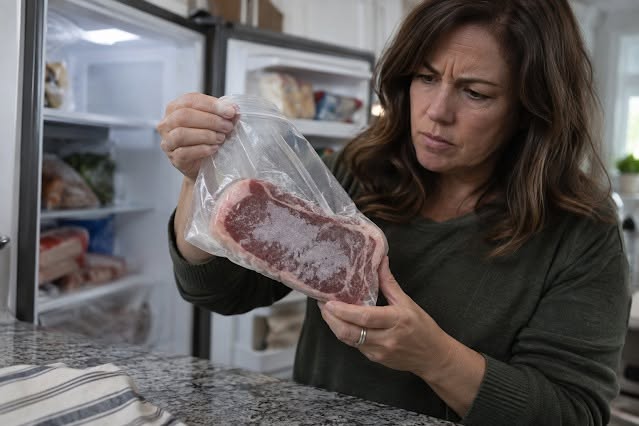
Beef may develop grayish-brown, tan, or pale patches. The surface can look rough, dry, or slightly wrinkled.
Some color changes in frozen beef may also be caused by normal chemical changes in its pigments. Color alone cannot determine whether meat is safe.
Freezer Burn on Chicken
Chicken may develop white or gray areas, particularly along thin edges. The skin can become dry, and exposed sections may look pale and tough.
Freezer Burn on Pork
Pork can develop dull gray or brown patches. Its edges may appear dry and firm after thawing.
Freezer Burn on Fish
Fish may show white, opaque, dry areas. The surface might look chalky or covered in thick frost, while the flesh can become tough after cooking.
Freezer Burn on Ground Meat
Ground beef, turkey, or chicken may appear discolored beneath damaged wrapping. Ice crystals can accumulate inside the package, and the surface may feel dry after thawing.
None of these visual changes alone proves that the meat is spoiled. You must also consider how it was stored and whether it stayed frozen.
Freezer Burn Versus Spoilage
Freezer burn and spoilage are different problems.
Freezer burn happens because frozen food loses moisture and is exposed to air. Spoilage happens when microorganisms or chemical changes make food unacceptable or potentially unsafe.
| Sign | Freezer Burn | Possible Spoilage |
|---|---|---|
| Dry pale patches | Common | Not a reliable sign alone |
| Frost inside packaging | Common | May also indicate temperature fluctuations |
| Leathery surface | Common | Possible after long storage |
| Strong unpleasant odor | Not caused by freezer burn alone | Warning sign |
| Slimy or unusually sticky texture | Not typical | Warning sign |
| Package leaking after thawing | Inspect carefully | Possible handling problem |
| Meat stayed frozen continuously | Usually a quality issue | Lower safety concern |
| Meat was warm for hours | Safety may be compromised | Discard may be necessary |
A freezer can stop most bacterial growth, but it does not necessarily kill all bacteria. Once food thaws and warms, surviving microorganisms can begin multiplying again.
Can You Judge Frozen Meat by Its Smell?
Frozen food may have very little odor, making it difficult to evaluate until it has thawed.
After safely thawing the meat in the refrigerator, check for a persistent sour, putrid, or otherwise abnormal odor. If the smell remains unpleasant after the package has been open for a few minutes, discard the meat.
Vacuum-packed meat can sometimes release a temporary confined odor when opened. That smell may fade after brief exposure to air. A strong odor that persists is more concerning.
Smell is useful for detecting obvious spoilage, but it cannot detect every harmful microorganism. Meat that smells normal may still be unsafe if it was left at room temperature for too long.
Storage history remains more important than the sniff test.
