

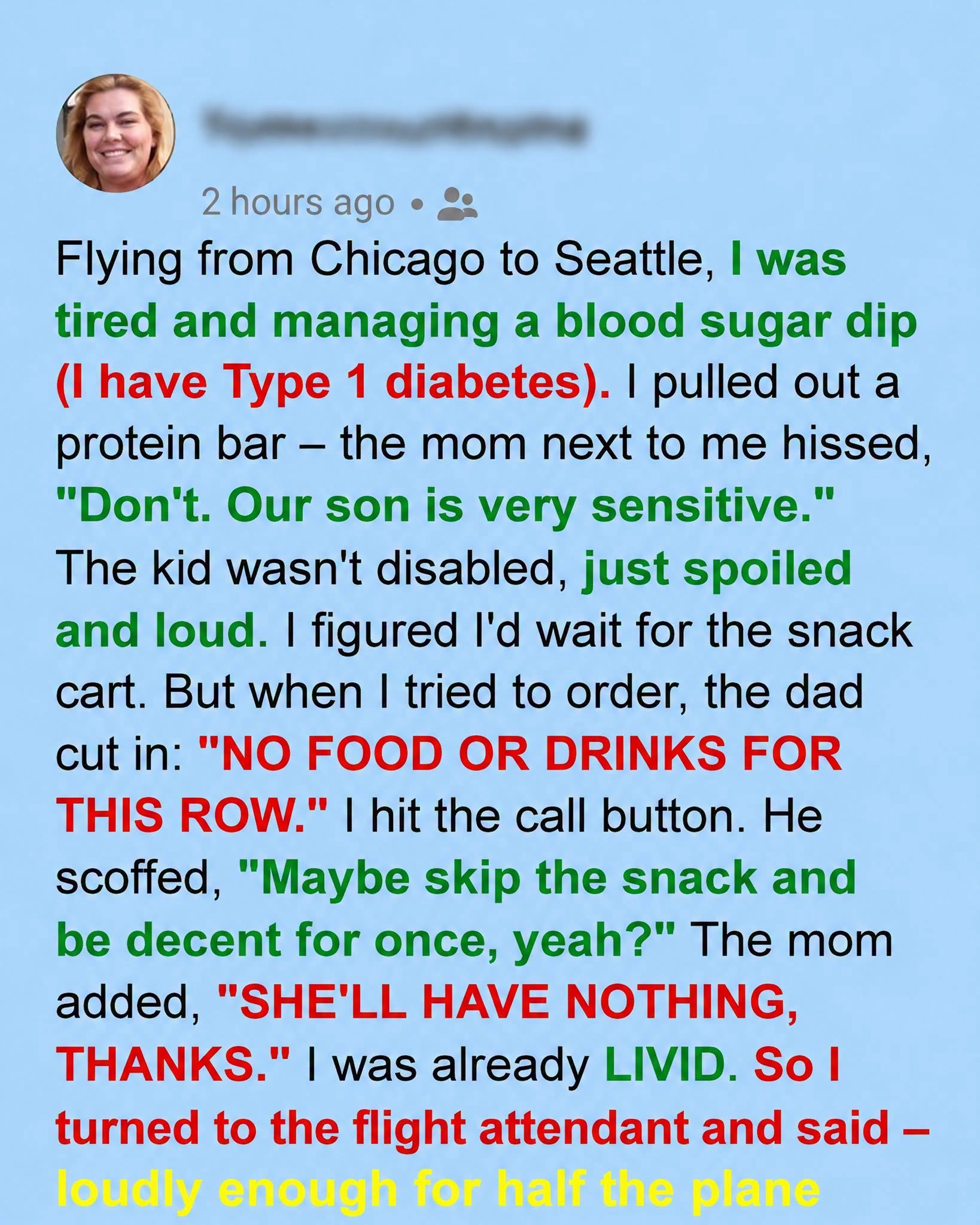
The ending includes no arrest, airline punishment, or apology from the parents. Those would be additions, not details from the source. Instead, it closes with the passenger feeling heard by the attendant and the travelers who supported her. That modest finish matters: receiving help, rather than getting revenge, is the actual resolution of the account.
Low Blood Sugar on a Plane: Information Outside the Story
The CDC’s low blood sugar guidance describes the 15-15 approach for many people who are awake and able to swallow: take 15 grams of fast-acting carbohydrate, wait 15 minutes, and check blood sugar again. Follow your prescribed plan, including any individual instructions that differ.
Examples include the appropriate amount of glucose tablets or measured juice. A protein bar is not automatically a suitable fast treatment; fat and other ingredients can slow absorption. Do not use this story as a reason to delay treating a low while waiting for a cart or avoiding an uncomfortable conversation.
Severe symptoms need urgent help. Someone unconscious or unable to swallow safely should not be given food or drink by mouth. Alert the crew immediately; emergency care and prescribed glucagon may be needed. This brief information is not a substitute for personal medical instruction.
The story’s useful distinction is that competing needs call for assistance, not a passenger-issued ban. Ask the crew early, describe the problem clearly, and let them help. Respect for a family’s concerns and prompt attention to a medical need do not have to be opposites.
The practical takeaway is not to rehearse a perfect speech for a disagreement. Someone feeling unwell may not have the energy for that. A short statement of the medical need and an early request for crew assistance are more useful than trying to persuade neighboring passengers first. The story’s lengthy argument is part of its narrative, not a recommended sequence to copy. No reader should feel required to repeat all those attempts before seeking help with a suspected low.
Thanks for reading, and here’s to kinder seatmates and calmer journeys. This unverified story is for entertainment, with general health information only—not personal medical advice. Use your clinician’s plan and seek urgent help when needed.
