

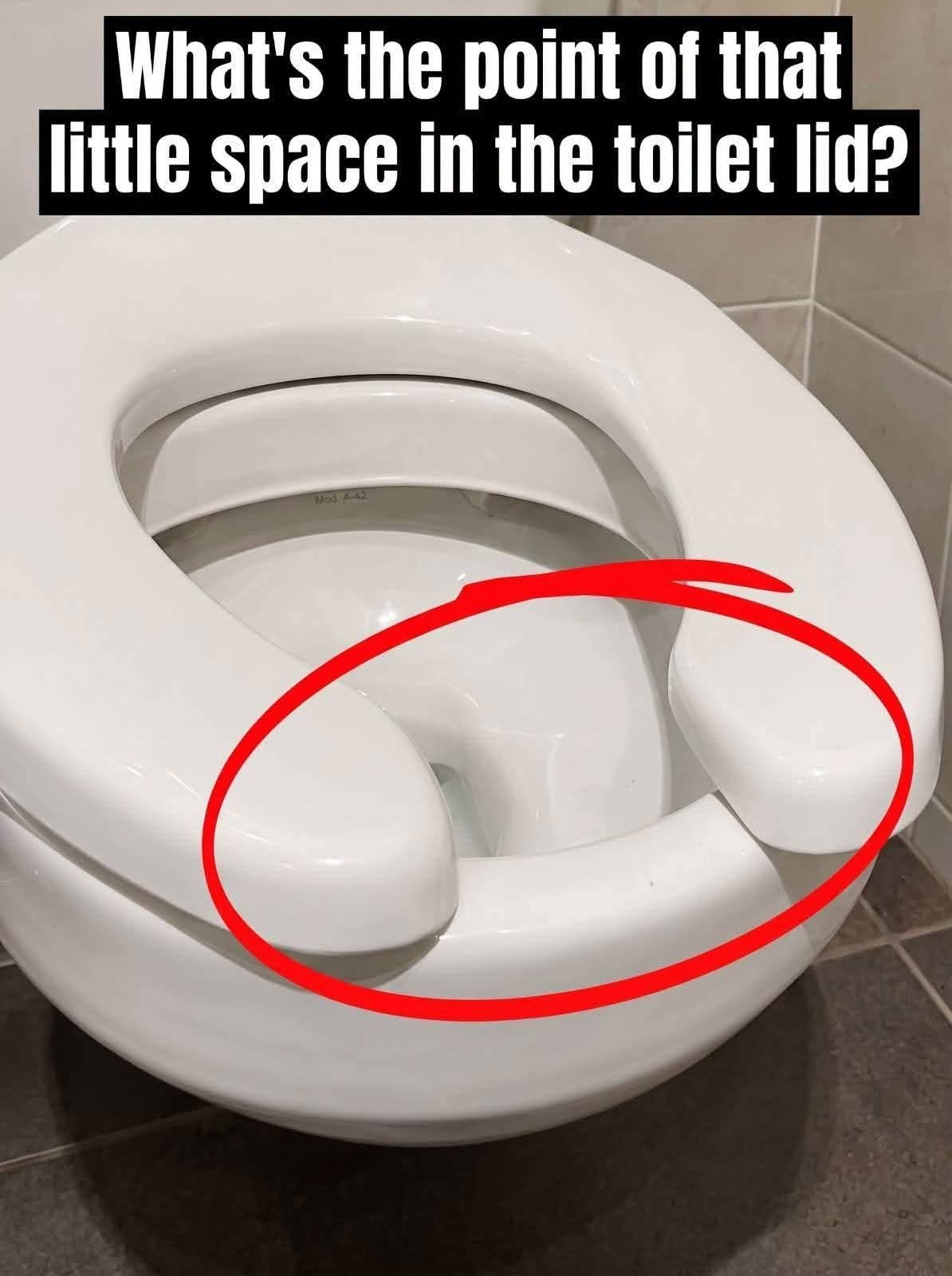
They’re usually called open-front toilet seats. They’re commonly used in public and institutional settings because the design can support easier cleaning, hygiene practices, clearance, and certain accessibility considerations.
Are U-shaped toilet seats more hygienic?
They can have practical hygiene and cleaning advantages, but the shape doesn’t make a toilet automatically sanitary. Regular cleaning and good hand hygiene remain essential.
Are U-shaped toilet seats required?
Requirements vary by jurisdiction and facility type. Some standards or codes may specify open-front seats in particular settings, but there isn’t one universal requirement that applies to every public toilet everywhere.
Why don’t people usually have U-shaped toilet seats at home?
Residential bathrooms typically have fewer users, and homeowners generally choose seats based on comfort, appearance, price, and personal preference.
Are U-shaped toilet seats designed for men?
Additional front clearance can be useful for male users, but that isn’t the only reason for the design. Hygiene, cleaning, institutional use, and accessibility considerations also play roles.
Does a U-shaped toilet seat prevent germs?
No. It may have some practical sanitation advantages, but it doesn’t prevent germs from being present on a toilet or in a public restroom.
Are open-front toilet seats only found in public bathrooms?
No. They’re also used in healthcare facilities, schools, workplaces, and private bathrooms.
Is the toilet itself different when it has a U-shaped seat?
Not necessarily. The U-shape generally refers to the seat rather than a special type of toilet bowl or plumbing system.
Should I be worried about sitting on a public toilet seat?
The most important precautions are ordinary hygiene practices. If the seat is visibly soiled, use another stall if possible or clean the surface appropriately. Most importantly, wash your hands thoroughly after using the restroom.
The Next Time You See One…
The next time you walk into a public restroom and see that familiar gap at the front of the toilet seat, you’ll know there’s more going on than meets the eye.
That little opening isn’t just a strange design choice.
It’s part of a long history of designing public fixtures around cleaning, maintenance, user needs, durability, and sanitation.
And that’s one of the things I love about everyday objects.
We see them hundreds of times without ever asking why they’re shaped the way they are.
Then one day, you notice something.
And suddenly, you can’t stop wondering.
Why is the seat shaped like that?
Why are public bathroom sinks so shallow?
Why do automatic faucets turn off so quickly?
