

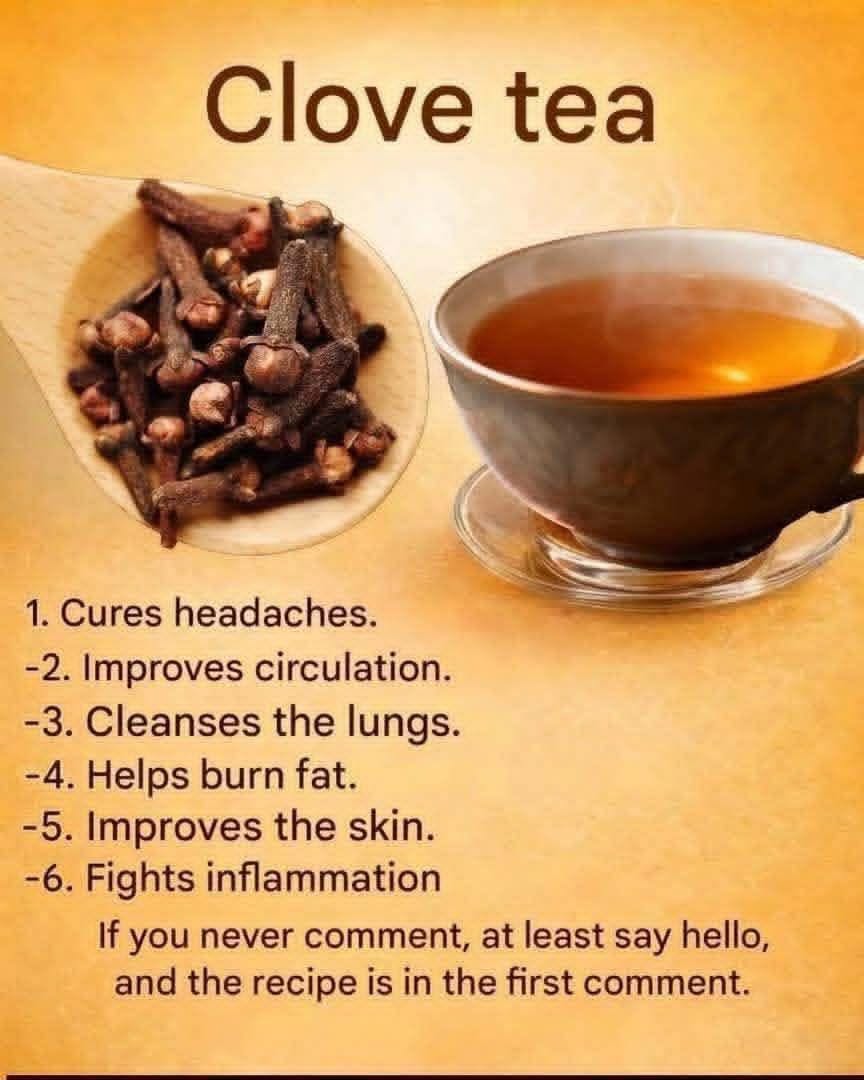
What Modern Science Suggests
Cloves contain:
- Antioxidants
- Eugenol (studied for anti-inflammatory and antimicrobial properties)
- Volatile oils
Research shows cloves have strong antioxidant capacity in laboratory settings. However:
- Clove tea is not a cure for medical conditions.
- Effects are generally mild when consumed as tea.
- Benefits are supportive rather than therapeutic.
How to Make Clove Tea
Simple Traditional Recipe
Ingredients:
- 4–6 whole cloves
- 1 cup (250 ml) water
- Optional: ginger, honey, lemon
Instructions:
- Bring water to a boil.
- Add cloves.
- Simmer 5–10 minutes.
- Let steep another 5 minutes.
- Strain and enjoy warm.
For a milder version, use 2–3 cloves instead.
How to Drink It
For most adults:
- ✔ 1 cup per day is generally sufficient
- ✔ Best after meals or in the evening
- ✔ Sip slowly while warm
Because cloves are potent, more is not better.
Ways to Soften the Flavor
If the taste feels too intense:
- Add fresh ginger for smoother warmth
- Stir in a little honey
- Add a squeeze of lemon
These combinations are common in traditional home preparations.
